



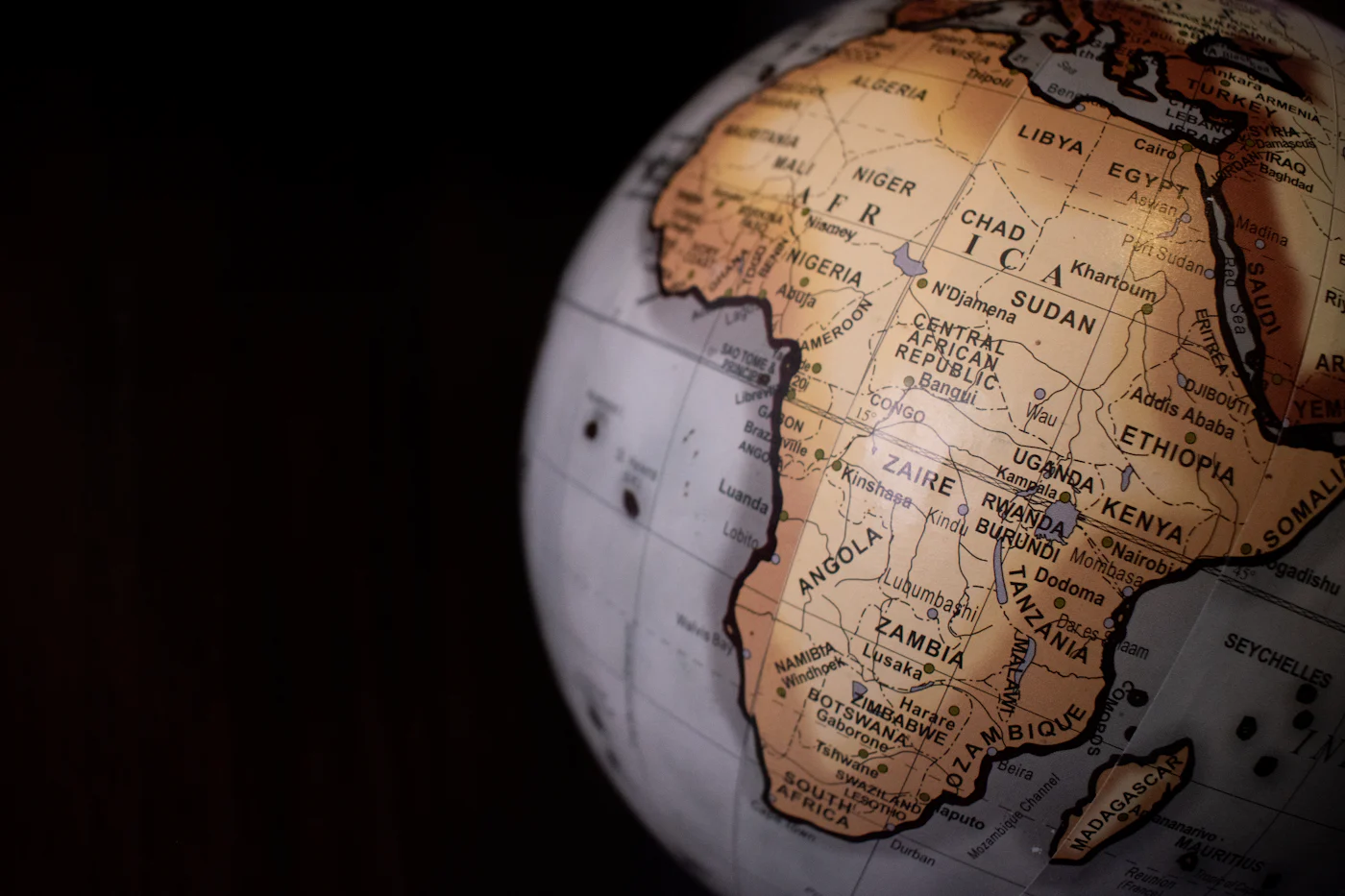
Africa has played an important role in advancing the business and human rights agenda. For many decades, this role was rather ‘passive’ and consisted mainly of witnessing complex human rights and environmental violations resulting from business activities on its territory and to provide courts and tribunals, located outside Africa (Canada, France, United Kingdom, Netherlands, United States of America etc.), with cases. Although legal instruments such as the 1982 Community Investment Code of The Economic Community of The Great Lakes Countries and the 1990 Charter on a regime of multinational industrial enterprises of Eastern and Southern Africa States already contained some rules on the obligations of investors, the production of norms and principles regarding business and human rights was rather exceptional.
However, over the last decade, the African continent has played a more ‘active’ role with the proliferation of initiatives aimed at better regulating the activities of companies and mitigating the harmful consequences of their actions. One of these initiatives is undoubtedly the adoption of the Agreement establishing the African Continental Free Trade Area(AfCFTA Agreement), on 21 March 2018. While the main objective of this Agreement is to eliminate trade barriers and boost intra-Africa trade, it also has implications for business and human rights. This contribution therefore discusses the impact of the AfCFTA on business and human rights and looks at the extent to which it can enhance responsible business conduct in Africa. The contribution adopts a twofold approach and analyses, on the one hand, the AfCFTA Agreement, and its protocols to discuss the provisions that have a direct link to responsible business conduct (a view from inside). In addition to being a free trade agreement, the AfCFTA is also part of the African Union Policy Framework on Business and Human Rights which includes other legal texts addressing issues related to business and human rights in the African context. This African Union Policy Framework will be analysed to determine the extent to which it can complement the AfCFTA in terms of responsible business conduct (a view from outside).
The African Continental Free Trade Area and Business and Human Rights
The AfCFTA Agreement entered into force on 30 May 2019 and trade under AfCFTA officially began on 1 January 2021. Although the AfCFTA Agreement does not directly address business and human rights-related issues, its Protocol on investment does. This protocol, adopted in February 2023, during the 36th African Union Summit in Addis Ababa (Ethiopia), includes a full chapter dedicated to investors’ obligations (chapter 5, articles 31 to 40) with a wide range of obligations ranging from compliance with human rights and labour standards to environmental protection, respect of the rights of indigenous peoples, etc. The level of specificity on investor obligations, contained in this chapter 5, has been described as “unprecedented” for an investment agreement and, according to some scholars, this protocol is “likely to constitute a reference point for the regulation of investor obligations in future investment treaties”.
However, it is difficult to deduce, from these articles, legal obligations imposed on investors particularly because the exact elements of such obligations are unclear. A closer look at this chapter 5 reveals that it contains recommendations rather than binding obligations whose non-compliance results in legal sanctions. For example, and according to article 33, investors and their investments shall support and respect the protection of internationally recognised human rights. What are the legal consequences if these human rights are not respected? Do these investors incur a sanction? And if yes, which sanctions ? These questions are not answered by AfCFTA Protocol on Investment.
To address some of these unanswered questions, it may be important to look beyond the AfCFTA Agreement and examine the African Union Policy Framework on Business and Human Rights
Beyond AfCFTA, the African Union Policy Framework on Business and Human Rights
The AfCFTA is more than a free trade agreement. It is also a flagship project of Agenda 2063: The Africa We Want, which is the continent’s strategic framework that aims to achieve its goal of inclusive and sustainable development. This continental framework must therefore be taken into consideration since AfCFTA refers to other continental legal instruments such as the African Charter of Human and Peoples’ Rights (see article 34 al 1 of AfCFTA Protocol on Investment). Also, the African Commission on Human and Peoples’ Rights, in its Resolution on Business and Human Rights in Africa – ACHPR/Res.550 (LXXIV) 2023, called on the African Union to take into account and reflect the AfCFTA in finalizing the African Union Policy Framework on Business and Human Rights.
An important instrument to examine is the African Charter of Human and Peoples’ Rights, Article 27 of which imposes duties and obligations on individuals. The African Commission on Human and Peoples’ Rights has interpreted this article 27, in its State Reporting Guidelines and Principles on Articles 21 And 24 of the African Charter relating to Extractive Industries, Human Rights and the Environment, and stated that “if this obligation can be imposed on individuals, there is an even stronger moral and legal basis for assigning these obligations to corporations and societies” (page 37). This Commission has also clarified the nature of these obligations which are legal obligations and not just matters of social responsibility: when and where breaches occur on account of the activities or actions of companies, various administrative, civil and criminal responsibilities ensue (pages 38-40). However, in cases such as Social and Economic Rights Action Center (SERAC) and Center for Economic and Social Rights (CESR) / Nigeria – 155/96 and Institute for Human Rights and Development and Others v Democratic Republic of Congo, Communication 393/10, the African Commission failed to hold corporate actors directly accountable for their actions that resulted in violations of human and peoples’ rights.
The African Court on human and peoples’ rights (ACHPR) had recently the opportunity to rule on the question of corporate accountability. But this continental Court missed that opportunity and rendered a decision that is questionable in many respects. In the case of Ivorian League For Human Rights (Lidho) And others v. Republic of Côte D’Ivoire, the African Court noted that even though the “responsibility to respect the obligations of international law is incumbent primarily on States, it is also true that this responsibility is incumbent on companies, notably, multinational companies” (page 36). However, this continental Court did not draw all the consequences arising from the recognition of direct corporate responsibility. Rather than directly holding the multinational company accountable for its human rights violations that occurred in Cote d’Ivoire, the ACHPR preferred to ask the Respondent state to ensure that corporate entities are held accountable for their acts relating to environment and the handling of toxic waste” (page 65). Why did the Court not directly hold multinational companies responsible, especially since there is a clear normative basis? This approach was criticized by Judge Blaise Tchikaya who, in his dissenting opinion, advocated for a “departure from the classic structure of international liability in human rights” in order to “establish the liability of private individuals who infringe environmental law or life” (page 16).
It is hoped that the African Regional Legally Binding Instrument to Regulate the Activities of Transnational Corporations and Other Business Enterprises, currently being developed by the African Commission, in collaboration with other relevant special mechanisms, will not only take into consideration and integrate all these normative standards but, more importantly, establish effective mechanisms to ensure accountability and access to remedies for business-related human rights violations in Africa.

Leave a Reply