







Introduction
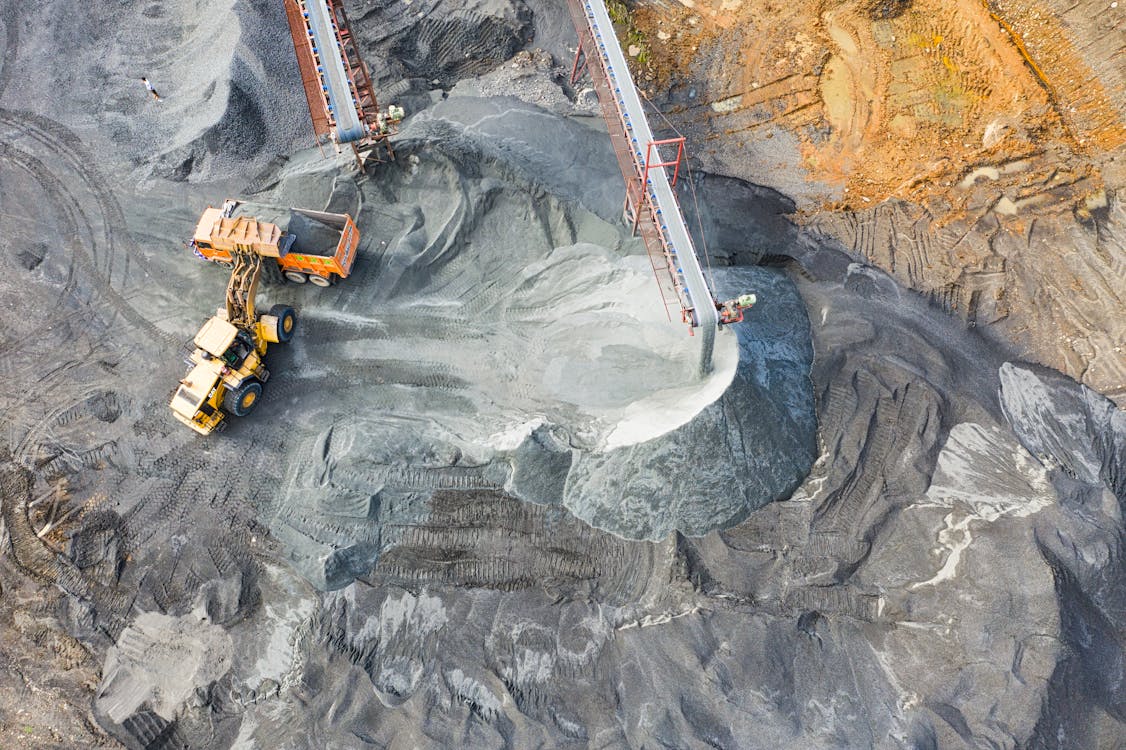
In 1993, the Broken Hill Proprietary Company (BHP) entered into an agreement with the provincial government of Balochistan concerning the development of mining capabilities in Pakistan’s Chagai Hills, located in the Tethyan Belt. The Australian Mining Company Tethyan Copper Company Pty. Limited (TCC) later took over the deal and replaced BHP in the Chagai Hills Exploration Joint Venture Agreement (CHEJVA). From 2006 to 2011, Tethyan was jointly acquired by the Canadian Barrick Gold Corporation (Barrick) and the Chilean Antofagasta, who invested heavily in mineral exploration at Reko Diq. The Reko Diq legal dispute arose when the Government of Balochistan denied Tethyan’s mining license application on November 15, 2011, prompting the company to file a claim with the International Centre for Settlement of Investment Disputes (ICSID) and the International Chamber of Commerce (ICC). The arbitration process at ICSID was initiated under the ‘old-fashioned’ Pakistan-Australia Investment Treaty, alongside ICC proceedings based on the CHEJVA.
In the Tethyan case, Pakistan was found liable for breaching investment treaty provisions concerning fair and equitable treatment, minimum standard of treatment, and indirect expropriation. It resulted in the announcement of a nearly $6 billion arbitration award, equivalent to the state’s 2019 IMF loan for the mining project that never advanced beyond the planning stage. The financial burden, coupled with accruing interest, would have severely strained Pakistan’s economy, jeopardising essential services for its most vulnerable populations. Consequently, these circumstances left no alternative but to negotiate the resumption of mining operations. In 2022, the Islamic Republic of Pakistan restructured an agreement with Barrick Gold, permitting the extraction of gold and copper in Reko Diq, located in the impoverished province of Balochistan.
In our analysis of the Tethyan v. Pakistan arbitration, we focus on a perspective that is often overlooked in many academic and blog discussions. The Reko Diq project, with its longstanding legal and environmental issues, has primarily prioritised the development of resources rather than the well-being of the people. The situation described showcases the inconsistency between the investment regimes and the United Nations Guiding Principles (UNGPs), which, under Pillar II, Principle 18, establish that to address human rights risks, companies should engage in meaningful consultation with potentially affected groups. The process is supposed to include dialogue with stakeholders, particularly those who have raised or may raise concerns, as such engagement is crucial to understanding the risks and harms that people may experience. In this context, we examine how local communities’ views regarding TCC’s mining activities have not been taken into account during the eight-year arbitration process. These dynamics underscore the ongoing tensions between transnational corporations and developing, yet vulnerable, nations, revealing the flawed practices embedded in both investment treaties and the arbitration mechanisms they create, which stand in stark contrast to the aspirations of the UNGPs.
The Reko Diq ‘Fiasco’ & (Un)heard Voices
The Chagai district, located in the Balochistan province of Pakistan, is home to various tribes, and the land holds deep cultural significance for these indigenous groups. The region faces a severe water shortage, which greatly limits access to this essential resource for the people of Balochistan. Balochistan, despite its wealth of natural resources, remains the poorest province in Pakistan. As local representatives emphasise, communities living in and around the Reko Diq project area suffer from extreme poverty and a significant lack of other basic necessities. Reports indicate that before the ICSID claim was filed, there were various allegations regarding the absence of local consent for the project and incidents of cyanide contamination in tribal grazing fields. Further observation is that TCC’s operations failed to explore opportunities to promote the well-being of people in the region, focusing instead solely on unrestricted excavation and the export of unprocessed copper. As such, those companies’ actions were at odds with the UNGPs, which envisages effective engagement to address the concerns of the affected local groups by enabling them to raise grievances and identify appropriate forms of remediation.
“The locals did not agree to this, […], this violation not only endangers the region’s autonomy and environment but also exacerbates the struggles already faced by the oppressed local population”, said Lateef Johar Baloch, a human rights defender. The Baloch National Movement’s spokesperson reiterated that “the exploitation of Balochistan’s national wealth continues without benefiting its people.” These deteriorating circumstances, under which the majority of the population lives, highlight the necessity to examine the ramifications of the TCC’s mining project from a bottom-up perspective. The start of the Reko Diq project exemplifies how weak rule-of-law adherence at both provincial and state levels allowed an agreement that largely ignored the local population’s needs and economic interests. Initially, public interest arguments were not central to the discussion at ICSID. Both the 2017 and 2019 rulings framed the dispute solely as a contractual matter between the parties without adequately considering or investigating its broader implications.
The closed nature of the ICSID system demonstrates the challenges in maintaining transparent communication between the affected groups and companies, which is a prerequisite for a proper due diligence process. As such, the investment law provides predominantly only avenues to present considerations for the two main parties – states and investors, which ignores the need to consider the voices of people on the ground. That’s why the tribunal’s analysis reveals a lack of elaboration for the negative impacts of mining on the local community. It did not take into account issues surrounding the social license to operate, nor evidence from local reports regarding human rights violations or environmental damage affecting the community. Pakistan, did, however, raise concerns about the company’s failure to secure formal permission to work by gaining community support and, crucially, their consent. The 2019 Award underscores that these observations received scarce attention and were of minimal concern to the tribunal. This outcome indicates that human rights and environmental issues were not sufficiently prioritised, suggesting that the views and well-being of the Baloch people were largely ignored in the arbitration proceedings.
The Reopening of Reko Diq Mine: What is Next for Pakistan?
Barrick Gold has commenced preparations for the Reko Diq mining project in Balochistan, claiming it will be “absolutely on track” to start production by 2028, though early signs of human rights risks have emerged. The 2022 agreement is not publicly available, but sources indicate that Barrick owns 50% of the equity, while the remaining 50% is shared between the central government and the government of Balochistan. This reopened deal attracted the substantial involvement of government entities, which requires an activity evaluation from the perspective of both human rights and environmental impacts. Initial observations indicate that the project does not meet the criteria of a proper human rights-based due diligence process, raising concerns about its adherence to UNGPs. The Reko Diq project is set to operate in a region that is both volatile and marked by conflict. There are numerous allegations of serious human rights violations, including enforced disappearances, extrajudicial killings, land grabbing, and suppression of dissent. These concerns are particularly alarming given the role that Pakistan’s military plays in business ventures, such as private security services, mining, transportation, real estate, and construction. The duality created by this engenders conflicting interests as the promise of substantial profits, which often come at the expense of local communities’ interests.
The military, through its large business network, had explicit intentions of being a substantial part of any future mining project in Reko Diq. The preliminary attempts to mine gold and copper were made in partnership with the Metallurgical Corporation of China and local Pakistani scientists, but these eventually failed. The ICSID tribunal observed complex inter-relations between different actors on the site and noted that the motivation behind the cancellation of the initial agreement lay in the state’s desire to pursue its own project at the site. The reconstitution of the agreement in 2022 provided new avenues for companies affiliated with the military to play a vital role in Reko Diq, along with other investment projects. The establishment of the Special Investment Facilitation Council, which has a significant military presence, reflects the military’s vested interest in investment projects.
Its recent strong support of the Reko Diq project further solidifies this alignment. In this configuration of power, one may question whether local voices have any significant role in discussions about the mining impacts on the land they inhabit and their human rights. Especially the recent surge in the use of force by armed groups in Balochistan, along with a state crackdown against peaceful protestors, has heightened the region’s vulnerability, further suppressing local voices. Similar to the arbitration, the disregard for local communities’ opinions during the re-opening of the Reko Diq, combined with the power imbalance between them and the military-corporate alliance, perpetuates continuous marginalisation.
The Need for a Project’s Human Rights Impact Assessment (HRIA)
Barrick Gold’s mining activities, in collaboration with military-led actors, raise concerns regarding adherence to human rights, emphasising the necessity for a comprehensive HRIA of these mining operations. As at May 2024, the company announced the Environmental and Social Impact Assessment (ESIA) for the Reko Diq project, which presented an overview of pressing security challenges in the area. The report lacks specific strategies to address these issues, implying that involving militarised personnel may increase tensions in the district, as there is no mention of consulting local residents’ opinions about their presence on the ground. It has been stated that Barrick employed the military-owned security company, ‘Askari Guards’, despite the known fact that this probably undermined trust in the project, further creating long-term instability.
Despite claims in Barrick Gold’s ESIA that impact assessment prioritises stakeholder engagement and promotes meaningful participation of local communities, it fails to incorporate stakeholders’ views into decision-making processes. Practically, there is no mechanism to track how the consultations impacted project plans, which means that the process itself is a mere tick-box compliance measure rather than a true effort to be inclusive. The report lacks details on the structure of the grievance system and the criteria for accessibility. This omission undermines the system’s effectiveness, especially in a region where access to justice is limited and community trust in formal systems is low. Thus, while the voices of local people are acknowledged on paper, they are treated as hypothetical risks rather than legitimate concerns that need to be addressed transparently.
Conclusion
The Tethyan v. Pakistan case starkly illustrates the ICSID procedure’s failure to adequately incorporate local perspectives in the decision-making process, in clear contradiction to the UNGP’s expectations regarding meaningful stakeholder engagement. The reinstatement of the agreement between Pakistan and Barrick Gold underscores the immense pressure that substantial arbitration awards can place on states. As at 2025, the exploitation of the Baloch region through the Reko Diq mine is set to continue, ignoring the local community’s rightful demands to have their concerns addressed. These gaps might be addressed if the company’s ESIA adopted concrete and detailed HRIA by integrating stakeholders’ concerns through participatory decision-making and establishing a strong grievance mechanism. Such an approach may contribute to meeting human rights obligations and mitigating risks effectively.


Leave a Reply