




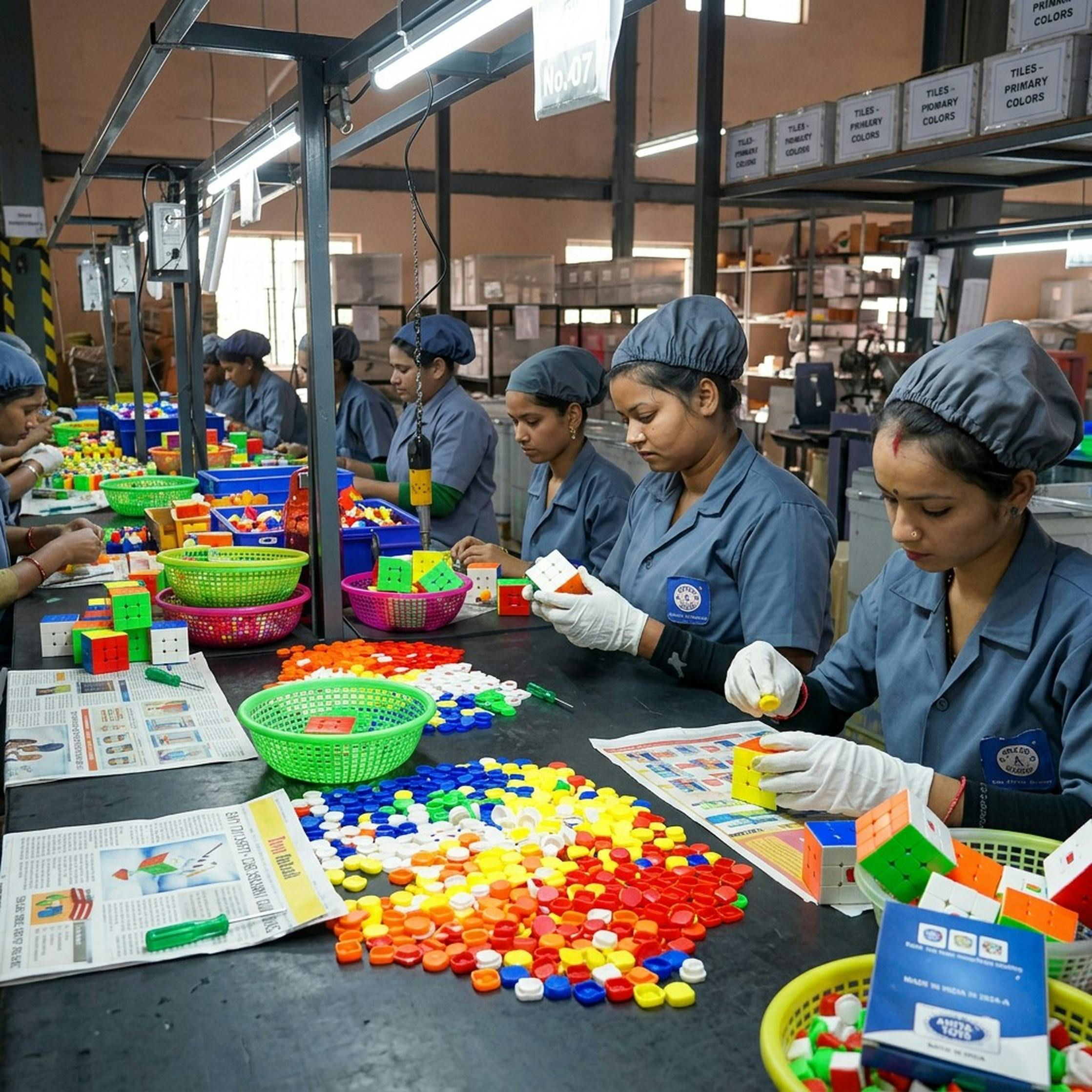
As India and the European Union move closer to a Free Trade Agreement (FTA), much of the attention has focused on tariffs, market access and climate cooperation. But the most consequential test of this deal will not be how efficiently goods move across borders. It will be whether the agreement meaningfully improves outcomes for workers, women and communities embedded in global supply chains.
The Content of the Trade Deal
Traditionally, FTAs have focused primarily on tariff reduction, market access and investment protection, with sustainability and labour provisions either absent or included as non-binding side commitments. Against this backdrop, the chapter-by-chapter summary of the EU–India FTA (The Agreement) signals an important shift. It includes a specialised chapter on trade and sustainable development, which introduces binding standards for environmental and labour protection, as well as for human rights. It includes several references to treaties in environmental law and climate change, such as the Paris Agreement on Climate Change and the Convention on Biological Diversity. In this regard, one of the advantages of the EU-India FTA is that it includes a non-regression provision, which obligates both parties not to undermine existing environmental, human rights, and labour law provisions, therewith encouraging enhanced investment opportunities.
The Agreement also establishes specialised consultation mechanisms that envisage the participation of experts and civil society to monitor its supervision and implementation. Regarding responsible business conduct, it reiterates due diligence standards. Furthermore, it encourages businesses in both countries to conduct human rights and environmental due diligence, meaning companies are expected to identify, prevent, mitigate and account for adverse impacts on people and the environment across their operations and supply chains.
In the area of labour rights protection the FTA refers to core international labour rights, including the abolition of child and forced labour and the right to safe, healthy environments. It has a section on encouraging gender equality at work. Moreover, it seeks to support the extended ecosystem for environmental, labour, and human rights due diligence through promoting trade in clean energy technologies, such as wastewater and renewable energy systems, while encouraging cooperation in the circular economy, including battery and plastic recycling.
The Agreement provides for technical cooperation between the parties to meet goals in more specialised sectors, such as textiles, apparel and automotive. In the textile and garment industry, it introduces conditional market access provisions that link preferential access to the EU market to compliance with human rights, sustainability, and environmental standards. In practice, this means Indian exporters can benefit from reduced or zero tariffs if they comply with EU laws and policies on sustainable and circular textiles and demonstrate oversight of their supply chains. There are also several provisions encouraging cooperation between Indian and European carmakers in producing electric cars. Particularly, cooperation is encouraged in supply chains for batteries, electronics, and technical wiring systems. The EU–India Trade Agreement also provides a platform for cooperation on climate action, including technical standards for batteries and hydrogen fuel cells, as well as recycling, to comply with requirements in both jurisdictions.
Labour standards, gender equality and social protections are no longer treated as peripheral concerns. They are embedded within a dedicated Trade and Sustainable Development framework, alongside commitments to uphold core labour rights, prevent discrimination and promote inclusive growth. For a trade agreement of this scale, such integration and interrelationship is a necessary and overdue step.
Domestic Frameworks and Regulatory Alignment
India already has domestic frameworks that echo these ambitions. The National Guidelines on Responsible Business Conduct (NGRBC) establish expectations for decent work, non-discrimination, and respect for human rights, while the Business Responsibility and Sustainability Report (BRSR) requires the top 1000 listed companies to disclose their policies and performance on social indicators. In theory, this creates alignment between global trade commitments and national corporate accountability.
The EU legal system has a detailed and complex framework on sustainability and business and human rights. However, the trade deal does not refer to any binding sources of law in the European Union regarding due diligence, disclosure, and reporting. Nonetheless, all Indian companies conducting business in the European Union are required to comply with existing due diligence and reporting obligations under these regulations. As previous research illustrates, to strengthen due diligence the metric should be included to monitor supply chain.
In practice, however, the divide between policy and lived reality remains wide. Evidence from the World Benchmarking Alliance’s assessments of the world’s most influential 2000 companies in 2026 shows that social and labour indicators continue to be among the weakest areas of performance. Many companies disclose high-level commitments to labour rights but fail to demonstrate how these commitments are implemented across suppliers, monitored at the country level or enforced when violations occur. Wages, working hours, freedom of association and access to remedy remain persistent blind spots.
Gender equality illustrates this challenge starkly. While the EU–India agreement recognises women’s economic empowerment, and India’s reporting frameworks encourage inclusive practices, corporate action has not kept pace. Recent data shows that a significant proportion of the world’s most influential companies still do not disclose basic care-related measures such as parental leave, childcare support or flexible work. This disconnection matters. Without addressing unpaid care responsibilities and structural barriers faced by women, trade-driven growth risks sustaining existing inequalities rather than reducing them.
The EU-India FTA’s climate and environmental provisions, covering emissions reduction, biodiversity protection and the promotion of low-carbon goods and services, are consistent with India’s broader transition ambitions. BRSR climate disclosures provide a useful tool for tracking emissions and environmental management, while trade cooperation can support access to clean technologies and green finance.
Yet climate strategies that overlook workers and communities are fragile by design. WBA’s data shows that while more companies are setting climate targets, far fewer explain how those targets will affect jobs, wages or supplier relationships. Transition planning often focuses on emissions trajectories whereas remaining silent on workforce impacts, reskilling needs or protections for vulnerable suppliers. Without a just transition lens, climate action risks shifting costs onto those least able to absorb them.
Supply chains sit in the center of this tension. The EU–India deal is likely to improve customs cooperation, regulatory predictability and digital trade facilitation, all of which matter for supply-chain resilience. But it stops short of requiring companies to demonstrate outcome-based due diligence across their value chains. India’s domestic frameworks encourage supply-chain responsibility, yet they do not consistently require verified risk assessments, time-bound remediation or open reporting on harms identified.
This matters not only for labour and human rights, but also for climate credibility. Environmental impacts, labour conditions and gender inequalities are often most severe at the lower tiers of supply chains. Addressing one without the others yields only partial, unstable progress.
The digital economy adds one more layer of complexity. The Agreement’s digital trade provisions provide certainty for cross-border services and consumer protection, but responsible AI governance remains underdeveloped. Global benchmarks in 2026 show that responsible AI and digital inclusion are among the lowest-scoring areas for major companies. Algorithmic management, opaque data practices and weak safeguards continue to affect workers, consumers and children online. India’s reporting frameworks are only beginning to capture these risks.
What emerges is a clear picture. The EU–India trade deal creates an enabling framework, but frameworks do not implement themselves. If this Agreement is to deliver broad-based and lasting growth, social outcomes must be treated not as add-ons but as the organising backbone of climate and economic transition.
Challenges
Civil society has pointed out several disadvantages or criticisms of the EU-India Trade Agreement as this relates to responsible business conduct and sustainability, including a lack of remedies for violations and the fact that most provisions and norms are programmatic and general. The Agreement, in several instances, refers to cooperation and a panel of experts, without imposing binding supervision systems on both parties. However, both India and the EU should clarify the remedies available to rights-holders if businesses fail to meet their due diligence obligations. As requirements for responsible business conduct grow stricter, they should also be reflected in novel trade agreements such EU-India Trade Agreement.
Civil society has also been critical, as the agreement does not ensure remedies for possible abuses of civil and political rights in the context of investment. Another criticism is that the agreement lacks sanctions for violating the Paris Agreement goals and does not protect indigenous farmers in India from subsidised EU agricultural exports.
Three Priorities
Three priorities stand out. First, capacity building and technical support remain essential, particularly for companies and suppliers navigating due diligence, just transition planning and responsible AI governance. Civil society should be involved in the compliance and supervision of the Agreement.
Second, transparency must move beyond disclosure toward verification, with clearer expectations for outcomes, remediation, and progress over time. The compliance of businesses and governments should be measured against clear existing indicators.
Third, integration matters. Climate, labour, gender and digital governance cannot be addressed in silos if trade-driven growth is to be resilient and fair. Therefore, they should be considered alongside business and human rights issues.
All in all, rights-holders will judge the agreement’s success on its capacity to adapt to obstacles such as climate change, inequality, and data protection. The EU–India Trade Agreement is a much-needed start. It demonstrates a growing recognition that trade, sustainability and social justice are inseparable. But its success will depend on whether governments, companies and investors are willing to invest in the hard work of implementation. Putting people at the centre of this deal is not a constraint on growth. It is the only way to make growth durable.


Leave a Reply