


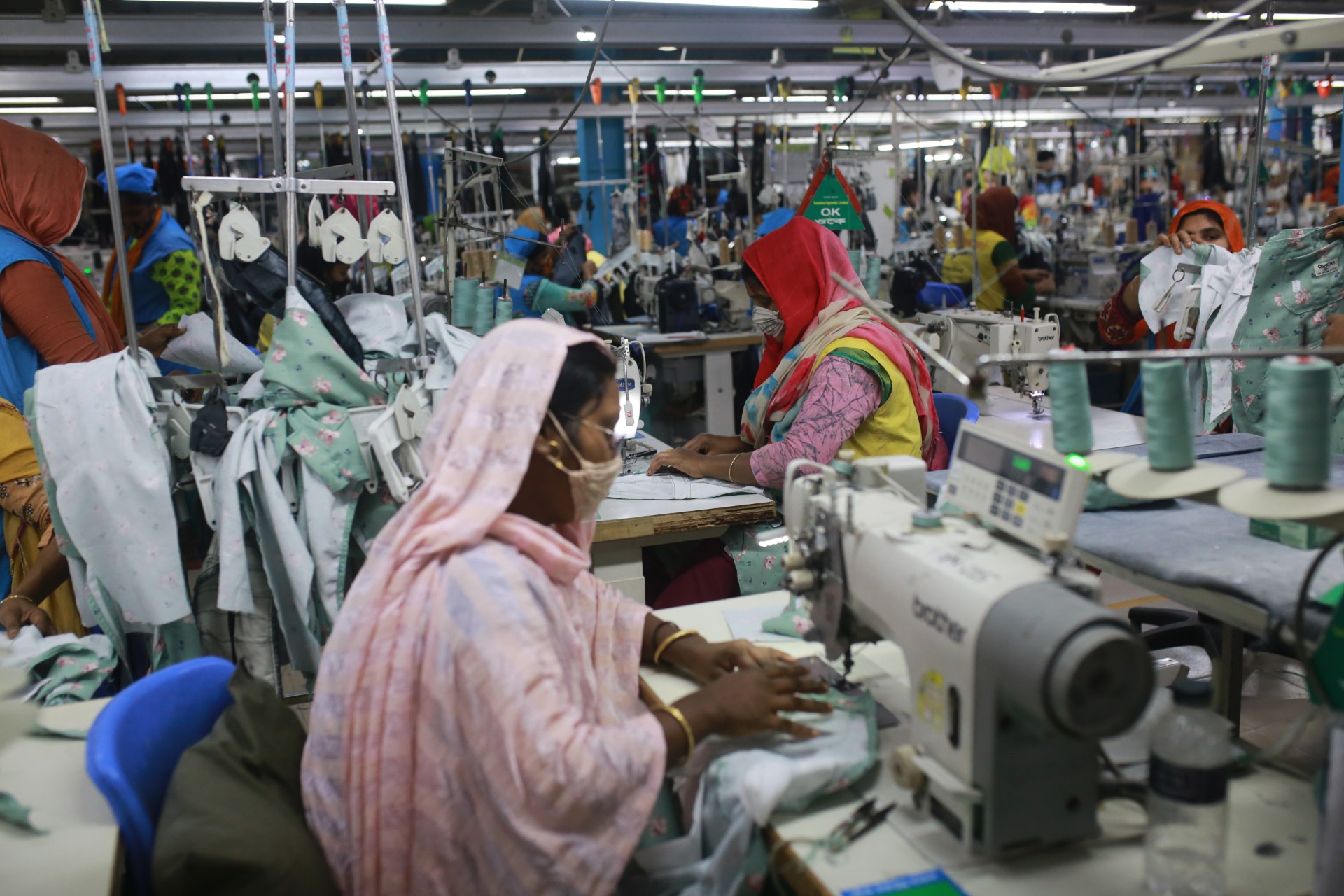
Climate change-driven extreme heat significantly affects the health, safety, and productivity of workers in garment manufacturing facilities, particularly in regions vulnerable to high heat and humidity. Despite this, garment and footwear brands are failing to adequately recognize the impact of climate change on workers in their global supply chains, focusing their environmental efforts on meeting net-zero emissions targets. Mechanical cooling measures, including air conditioning (AC), play a critical role in reducing heat stress, but their use is often constrained by pressure to reduce greenhouse gas (GHG) emissions. This creates a fundamental tension for some manufacturers, who must balance emissions targets with protecting their workforce. The investor community must recognize the importance of promoting adaptation measures to protect workers from climate change, rather than only supporting mitigation measures.
The Rise of Extreme Heat
According to the World Meteorological Organization, the past decade have been the hottest years on record with 2024 seeing the average person face 41 additional days of “dangerous heat”. In 2024, the global average temperature rose to approximately 1.6°C (34.88°F) above pre-industrial levels (1850-1900), with NASA acknowledging a streak of 15 consecutive months (June 2023 to August 2024) that set monthly temperature records. The high global temperatures coupled with high atmospheric water vapor levels lead to unprecedented global heatwaves and heavy rainfall.
Extreme heat and humidity are fast becoming one of the most dangerous threats to occupational health. The International Labour Organization (ILO) identified in a 2024 report that 70% of the global working population, 2.41 billion workers, are likely to be exposed to extreme heat at some point during their work. According to the ILO, this results in an average of 22.85 million non-fatal injuries and 18,970 deaths annually.
Wet-bulb globe temperature (WBGT), which accounts for temperature, humidity, wind, and sunlight, is used to assess heat stress risks. A WBGT of 32°C signals dangerous levels of heat stress, the leading cause of weather related deaths, with serious consequences including heatstroke, kidney damage, and cardiovascular strain. High heat also reduces cognitive functioning, leading to a rise in workplace accidents. In 2023 alone, an estimated 512 billion potential working hours were lost due to extreme heat, nearly 50% more than the 1990s average.
Extreme Heat and the Garment and Footwear Sector
Asia is a crucial center for garment production. In 2019, the ILO reported that the Asian garment sector accounts for 55% of global garment clothing and textile exports and employs approximately 60 million workers. South and Southeast Asia are also regions where extreme heat and humidity are having a disproportionate impact, with 74.7% of the workforce in the Asia and Pacific region exposed to extreme heat.
Garment manufacturing workers in this region often work in poorly ventilated factories, surrounded by heat-emitting machinery, under intense production pressure during peak heat periods and return to overcrowded, unventilated accommodation that makes adequate rest difficult. During periods of extreme heat and humidity, garment workers have described stifling conditions that make it extremely difficult to work, often resulting in headaches, dizziness, muscle cramps, and exhaustion. Without proper intervention, these symptoms of heat stress and dehydration can escalate to organ failure and, in severe cases, death.
Extreme heat isn’t only a health risk, it also threatens production itself. In April 2024, South and Southeast Asia experienced record-breaking heatwaves. During this period, garment unions across the region reported a surge in worker illnesses, leading to increased absenteeism, lower productivity, as well as malfunctioning equipment due to overheating. Cornell University’s GLI report found that if nothing is done to curb the impact of increasing temperatures and flooding on the garment industry in Bangladesh, Cambodia, Pakistan, Vietnam, then these factors could reduce export earnings from the sector by approximately USD 65 billion by 2030. Despite these growing risks, many global brands have yet to address the threat that extreme heat poses to their supply chains.
Cooling Manufacturing Facilities
In 2024, the ILO outlined a hierarchy of heat mitigation measures: elimination, substitution, engineering controls, administrative controls, and PPE. While elimination, such as relocating production, and substitution, such as replacing heat-intensive machinery, are most effective, they are often impractical in garment manufacturing.
Administrative controls, such as work-rest cycles, hydration, shifting work hours, acclimatization, and heat awareness training, can help but they have limitations. Night shifts, for example, raise safety concerns and conflict with caregiving responsibilities. Workers living in poorly ventilated housing may struggle to rest during hot days, increasing fatigue-related risks. For suppliers, shortened shifts or extended breaks can hinder their ability to meet brand-imposed deadlines.
Engineering controls reduce exposure to heat through active or passive methods. Active cooling, like AC, evaporative cooling, or immersion in cool water, directly lowers the environmental temperature and supports the body’s natural cooling processes. Passive measures, such as natural ventilation, reflective rooftops, shaded areas, and insulating heat-emitting machinery, can reduce heat buildup but are less effective at lowering core body temperature.
At lower WBGTs, passive and administrative controls may suffice, but above certain thresholds, active cooling becomes essential to safeguard worker health. The most effective heat mitigation strategies reduce metabolic heat production and enhance the body’s ability to dissipate heat through convection, radiation, and evaporation. AC systems, in particular, provide the most reliable solution at high WBGT levels, removing both heat and humidity regardless of ambient conditions. In contrast, evaporative coolers work only in dry environments. As extreme heat events intensify, demand for such solutions is becoming increasingly urgent.
Despite their effectiveness, AC systems are often seen as unfeasible by manufacturers due to high energy use, GHG emissions, installation demands, and maintenance costs. Lower-cost AC units tend to be less energy efficient, and many systems release hydrofluorocarbons (HFCs) – refrigerants thousands of times more potent than carbon dioxide.
Any heat mitigation strategy must balance feasibility, cost, and environmental impact. Expensive adaptations may push brands to relocate production rather than invest in factory upgrades. With passive and administrative measures offering only limited protection, some manufacturers in heat-vulnerable regions face a difficult trade-off: reducing GHG emissions to stay competitive, or using AC to protect workers’ health – an option that remains financially or logistically out of reach for many others.
Role of Multinational Corporations in Addressing Climate Change
Garment and footwear brands are under increasing pressure from regulators and consumers to reduce their environmental impact and help mitigate global warming. Yet brands’ Scope 3 emissions targets, those addressing indirect GHG emissions across a company’s value chain, including both upstream and downstream activities, often overlook the needs of the workers at the heart of their supply chains.
The Paris Agreement (2015) indirectly affects multinational corporations by encouraging alignment with national climate goals. As a result, many companies are voluntarily committing to science-based targets (SBTs), which are designed to align emissions reductions with the Paris Agreement’s 1.5°C or 2°C limit. For example, Levi Strauss revised its near-term Scope 3 target from a 40% reduction by 2025 (from a 2016 baseline) to a 42% reduction by 2030 (from a 2022 baseline) in line with the updated SBTi Net-Zero Standard. However, such ambitious targets are often imposed uniformly across supply chains without adequate financial or logistical support, disregarding local contexts or supplier capacity and rarely considering the social consequences for workers. In some cases, suppliers are penalized for falling short.
For example, unlike other South Asian garment-producing countries, Sri Lanka’s export-oriented garment industry has a relatively long-standing practice of using AC to cool manufacturing facilities. Some suppliers in Pakistan also use AC to manage indoor heat. However, several Pakistani suppliers have shared that they are now weighing whether to dismantle their AC systems to meet Scope 3 emissions targets set by buyers and remain competitive, even if this puts worker comfort and safety at risk. This narrow focus on mitigation (cutting emissions) over adaptation (protecting workers from rising temperatures) risks leaving those on the factory floor increasingly exposed to the health and productivity threats of extreme heat.
The Role of Investors
To implement effective heat mitigation across global supply chains, a model of shared responsibility is essential. This means all stakeholders – brands, suppliers, governments, consumers, industry bodies and workers – must collectively ensure fair labor conditions and uphold human rights. The approach involves industry-wide collaboration, assessing the scale and cost of the problem, and committing to share responsibilities and financial burdens. Crucially, brand buyers must provide the necessary support to enable their suppliers to protect workers from the growing risks of extreme heat.
Investors have a critical role to play in addressing extreme heat across supply chains. Both by supporting long-term climate solutions and advocating for urgent, short-term worker protections. In the long run, investment should flow toward energy-efficient industrial air conditioning systems and the expansion of renewable energy infrastructure, such as solar panels, to power these systems sustainably.
However, given that extreme heat is already endangering workers’ health and safety, immediate action is needed. Mechanical cooling, including the use of AC units, should be recognized as a responsible and necessary business practice during heatwaves, not penalized. To this end, emissions from AC used specifically to protect workers during extreme heat events should be carved out or reported separately in sustainability reporting frameworks and ESG (environmental, social and governance) assessments.
Climate disclosure regulations, such as California’s climate reporting law and the EU’s Corporate Sustainability Reporting Directive (CSRD), could allow for such differentiation within Scope 3 emissions. Similarly, voluntary frameworks like the Global Reporting Initiative (GRI) and the International Financial Reporting Standards’ (IFRS) Sustainability Disclosure Standards should distinguish emissions tied to worker protection. ESG ratings agencies, such as Morgan Stanley Capital International (MSCI), Sustainalytics, and S&P Global, must evolve their scoring models to fairly assess emissions linked to lifesaving adaptation measures. Finally, extreme heat mitigation should be elevated as a priority social stewardship issue for responsible investors and coalitions like the Principles for Responsible Investment (PRI) Advance, particularly for those already active on labor rights. Without these adjustments, suppliers will continue to lack adequate support and may be forced to choose between meeting brands’ unilateral GHG reduction targets and protecting their workers from life-threatening heat.
Conclusion
Prioritizing emissions reductions within global garment supply chains must not come at the expense of worker wellbeing. Climate change–driven extreme heat poses an immediate and growing threat to the global workforce, and adaptation measures are urgently needed to safeguard health and safety. A model of shared responsibility can support coordinated heat mitigation efforts while empowering workers to advocate for their desired cooling solutions. In extreme heat conditions, the use of AC should not be penalized under unilateral emissions targets. In the short term, investors must recognize the necessity of mechanical cooling during heatwaves by supporting carve-outs for AC-related emissions in reporting frameworks, while continuing to invest in renewable energy and energy-efficient cooling technologies for long-term sustainability.

Leave a Reply