




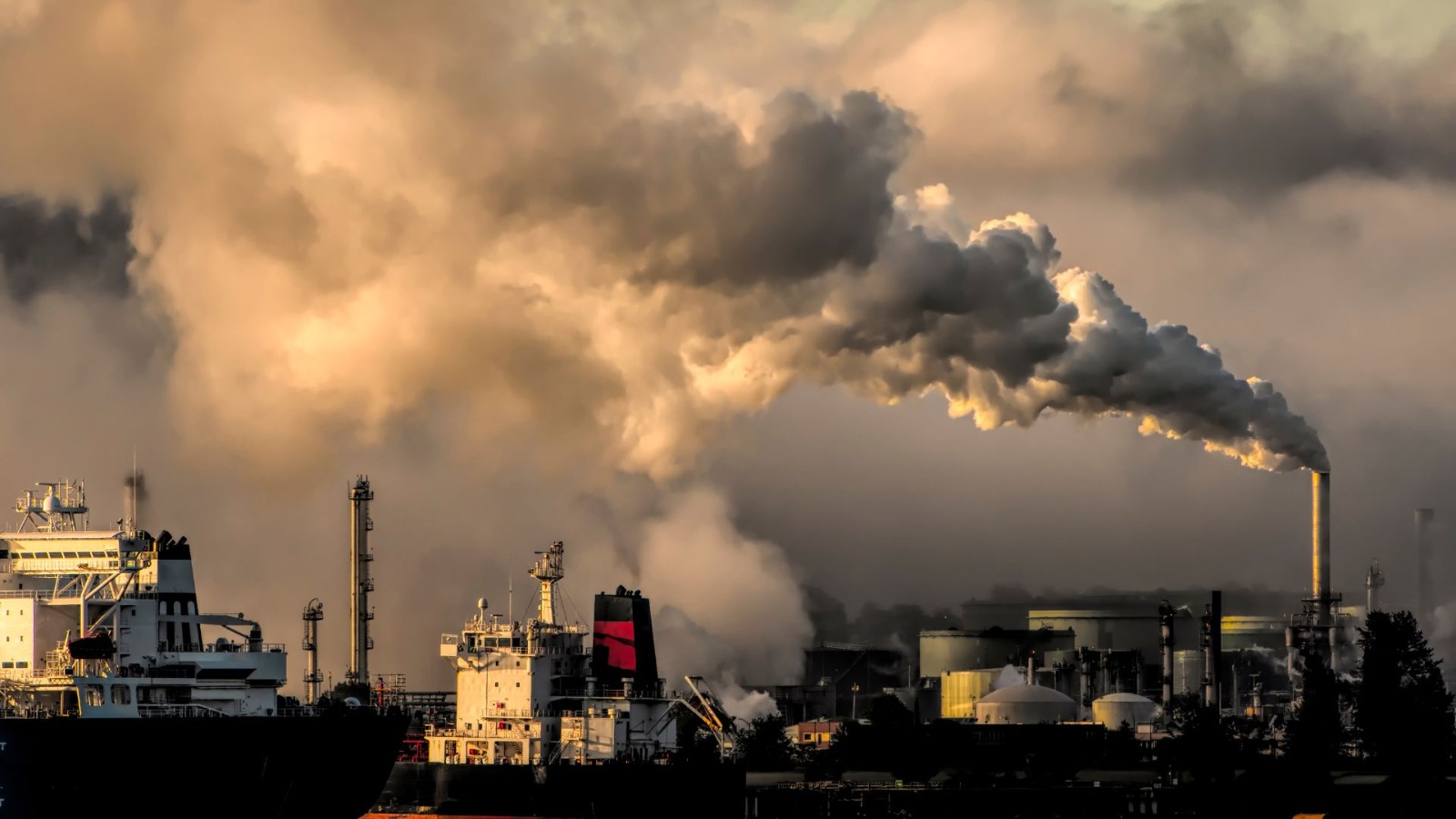
What happens when the face of sustainability hides injustice?
As countries and companies rush to decarbonize their economies, “green steel” has emerged as a promising solution in the fight against climate change. Yet, as our recent research shows, this transition isn’t always as clean or just as it appears—especially when it comes to Brazil’s steel sector. At the centre of this debate lies the case of Ternium, a major player in Latin American steel production, whose operations in Brazil raise serious concerns about transparency, accountability, and the true costs of “sustainability.”
This blog post unpacks the contradictions behind Ternium’s sustainability claims and explores why responsible investment must mean more than following formal ESG checklists. It must also involve listening to the realities of impacted communities and demanding accountability across entire supply chains.
The Problem: When Sustainability Bypasses Human Rights
The transition to a low-carbon economy is one of the defining challenges of our time. Reducing greenhouse gas emissions, adopting cleaner technologies, and shifting away from fossil fuels are urgent steps to address climate change. But if these changes are made without considering their social consequences, they risk repeating – and even deepening – the very injustices they are meant to solve. That’s where the concept of a just transition comes in. As noted by Cambou and Buhmann in the recent Business and Human Rights Journal special issue Business, Human Rights and Just Transition in the Energy and Extractive Industries just transition’s concept deserves a rights-based approach. It’s not just about cutting carbon; it’s about ensuring that environmental progress doesn’t come at the cost of human dignity, workers’ rights, or the well-being of vulnerable communities. A just transition demands that climate action be fair, inclusive, and respectful of the social fabric it touches.
However, in practice, the reality often looks different. Under the surface of many “green” strategies lie new forms of exploitation and environmental degradation. What is marketed as sustainable can, in fact, disguise harm – especially when companies focus only on emissions numbers while ignoring the human cost of how those reductions are achieved.
One striking example comes from Brazil’s steel sector. To produce what is marketed as “green steel,” companies have started replacing coal with charcoal made from eucalyptus plantations – a material seen as renewable and less carbon-intensive. But this shift, while promising on paper, conceals a troubling reality.
Behind the charcoal used in steel production is a highly informal, opaque, and often exploitative supply chain. Workers are frequently exposed to dangerous conditions, with little or no legal protections. Charcoal production is also linked to deforestation, biodiversity loss, and land conflicts—particularly when eucalyptus monocultures displace native vegetation or infringe on traditional territories.
In our research, we take a closer look at this “hidden chain” behind green steel production. We ask a fundamental question: can a transition be truly just if it relies on labour exploitation and environmental harm? And if not, what must change in the way companies and their investors approach sustainability?
How We Investigated
Our research critically examined Ternium’s operations in Brazil through multiple lenses:
-Document analysis: including Ternium’s official sustainability reports (especially 2023), the GHG emissions registry from the Getúlio Vargas Foundation, and public corporate disclosures.
-External assessments: such as the PACS Institute’s Climate Change and Steel: Local and Global Impacts of Ternium Brazil report and The Real Cost of Steel by the Fair Steel Coalition.
-Regulatory and investment frameworks: we analysed national and international sustainability standards-like the EU Taxonomy Regulation standards, the UN Principles for Responsible Investment (PRI), and Brazilian regulatory updates from the Securities Commission and Central Bank.
-Contextual data: including information on forced labour, eucalyptus monocultures, and energy usage from public agencies and investigative journalism (e.g., Repórter Brasil).
-By triangulating these sources, we found significant gaps between what is reported and what the practices produce on the ground.
What We Found: Green Steel Built on Grey Realities
1. High Emissions, Low Local Benefit
Ternium’s plant in Santa Cruz (Rio de Janeiro) is its most productive unit, and despite its efforts towards sustainability, as expressed in its reports, serious human rights concerns can be raised, particularly in relation to environmental and social justice. As the company’s most productive unit, the plant is responsible for over 60% of Ternium’s global emissions, releasing more than 11.6 million tons of CO₂ in 2017 alone—nearly half of all emissions for the entire city of Rio de Janeiro. This concentration of pollution in a single locality directly affects the local population’s right to health and to a clean, healthy, and sustainable environment, especially when air quality and other ecological factors are degraded by industrial activity.
Moreover, the fact that up to 97% of the steel produced is exported reveals a deep imbalance: while the local community bears the environmental and health burdens, the economic benefits are externalized, flowing primarily abroad. This dynamic exemplifies environmental injustice, where marginalized or less empowered communities are disproportionately impacted by pollution and resource exploitation without a fair share of the economic returns.
There are also concerns regarding the community’s right to access information and to participate in environmental decision-making. If affected populations were not adequately consulted or informed about the environmental risks posed by the plant, this may constitute a violation of their procedural rights under international principles such as those enshrined in the Escazú Agreement. Additionally, under the UN Guiding Principles on Business and Human Rights, Ternium has a responsibility to identify, prevent, and mitigate adverse human rights impacts linked to its operations—responsibilities that appear to be in question in this case.
2. Charcoal: A Dirty Secret Behind “Clean” Steel
The company’s decarbonization plan hinges on replacing coal with charcoal from eucalyptus plantations. At first glance, this appears to be a step toward sustainability, since charcoal is considered a renewable source. However, when we look closer, this approach raises serious social and environmental red flags.
Monocultures are known as green deserts. They are water-intensive, rapidly depleting local water tables and reducing availability for surrounding communities and ecosystems. They are also hostile to biodiversity, as they replace native forests and vegetation with uniform tree crops, eliminating the complex habitats needed to support wildlife; and they are linked to land-use conflicts, as expanding plantations encroach on indigenous territories, traditional lands, and conservation areas.
Besides all that, the charcoal sector in Brazil is rife with human rights violations. Widespread informality has been found in the sector, with workers often lacking contracts, health protections, or social benefits; or facing dangerous working conditions including exposure to high temperatures, toxic smoke, and physical exhaustion in remote charcoal kilns. There is a persistent pattern of forced labour and human rights groups like Repórter Brasil have documented hundreds of cases where workers – sometimes children- have been found in conditions analogous to slavery.
Despite these risks, Ternium does not disclose the origin of its charcoal, nor does it have traceability, auditing, or due diligence processes in place.
The result? The company’s green claims are built on a supply chain that remains invisible, unaccounted for, and potentially abusive.
3. Transparency in Form, Not in Substance
Ternium’s reports align with global standards like the Global Reporting Initiative, Sustainability Accounting Standards Board, and the Greenhouse Gas Protocol, i.e. when they use terms like “climate governance” and “Scope 3 emissions,” and outline a target to cut emissions intensity by 15% by 2030. But these reports fail to provide verifiable data, especially for Brazil. While initiatives are mentioned-i.e. energy efficiency-there is no relation with the protection of human rights on the supply chain of the initiatives adopted to reduce emissions.
Moreover, while the company boasts about wind energy investments in Argentina, it offers no comparable initiatives for its highly polluting Brazilian plant.
The Bigger Picture: Responsible Investment Under Scrutiny
The Ternium case illustrates a broader issue with ESG investing and green finance. Investors rely on formal ESG reports and indexes to assess a company’s environmental, social, and governance performance, with the goal of identifying risks, ensuring regulatory compliance, and aligning investments with sustainability goals. For instance, in mid-2019 Ternium’s Mexican unit (Techgen/Tenigal) took a $640 million syndicated loan arranged by Citigroup, Crédit Agricole CIB and Natixis, all of which are committed to aligning financing with sustainability efforts. While the company may present a positive ESG profile through formal reports, these documents can obscure harmful environmental practices-such as the extreme concentration of emissions-especially when the company itself controls the narrative. This disconnect can mislead investors, making them unaware of the actual social and environmental risks associated with their investment.
Our research emphasizes the need for a deeper level of investor due diligence on human rights, including demanding full traceability of supply chains, not just looking at final ESG ratings; identifying who owns and funds the company, including its subsidiaries and offshore holdings; matching financial flows to legal and ethical obligations, such as the Equator Principles or the OECD Guidelines.
Without this level of scrutiny, there is a real danger of financial greenwashing – where capital flows to companies that look clean on paper but operate dirty on the ground.
A Call to Action: From Compliance to Commitment
What’s at stake here is more than reputational risk. The transition to a low-carbon economy cannot deepen inequality or replicate extractive logics. A truly just transition must be ecological, yes – but also ethical, inclusive, and grounded in territorial realities, following Heffron and McCauley’s claim for a new concept of just transition that also embeds a human rights perspective. Energy transition initiatives cannot be grounded solely on the fact that they move away from fossil fuel use and thereby contribute to environmental protection and climate change mitigation. They must also pay close attention to the impacts they may have on people and on fundamental rights, including the rights to housing, culture, life, and health.
We need to shift the lens from formal commitments to lived experiences in communities; from glossy sustainability reports to the actual labour and environmental conditions in the supply chain; from passive investing to active responsibility by those who finance these transitions.
Final Thoughts
The case of Ternium in Brazil is not just a warning—it’s a mirror. It shows us that the road to decarbonization, if built on silence, exploitation, and half-truths, will only reproduce the very injustices it claims to fight.
For governments, investors, and companies alike, this moment demands more than metrics. It demands moral clarity, political courage, and a commitment to putting people -not profits- at the centre of the transition.


Leave a Reply