





A new law on the cards
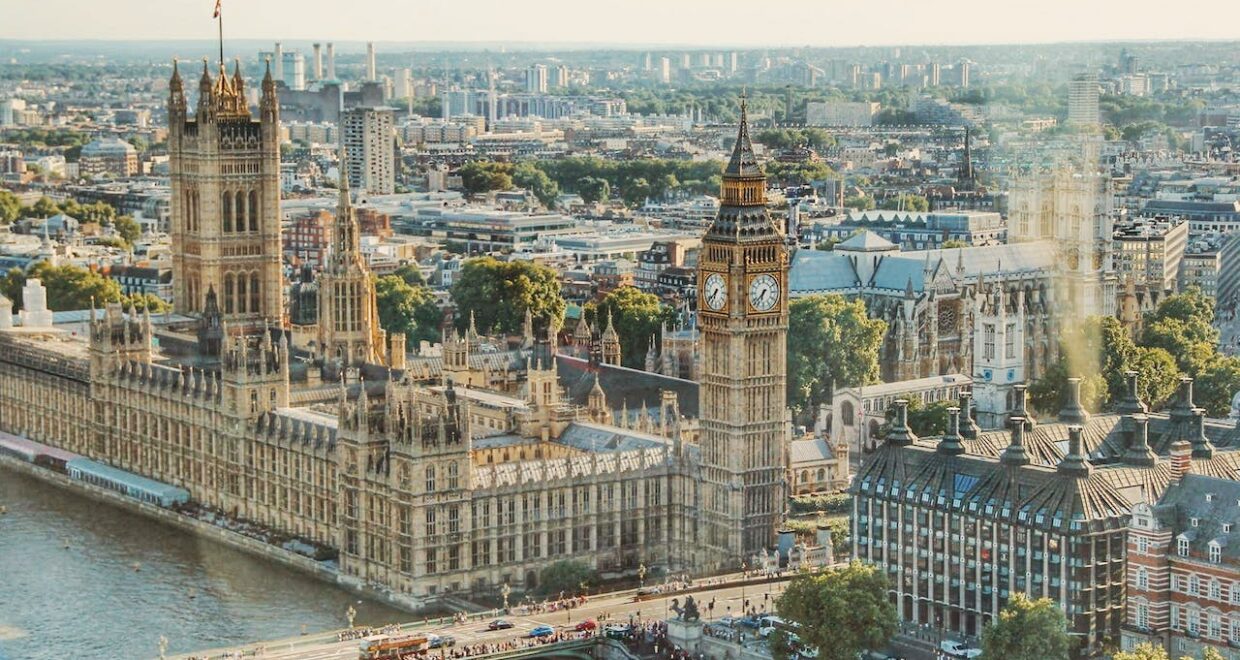
It has been a long journey for the UK to bring domestic force to its endorsement of the UN Guiding Principles on Business and Human Rights (UNGPs). But now, Baroness Lola Young has attempted to close this great lag by tabling a Private Member’s Bill in the House of Lords to fill the accountability gap for corporations in relation to human rights and environmental abuses in their general operations and own activities, as well as in their supply chains.
The Corporate Justice Coalition’s report, Bridging the gap: How could a UK Business, Human Rights and Environment Act have made a difference?, lays out 15 cases of human rights abuse and environmental harm linked to UK companies and public bodies – showing why this new model of law is needed.
One case demonstrates the barriers to justice faced by more than 13,000 members of the Ogale and Bille communities in the Niger Delta as part of their case against British oil multinational, Shell, for pollution of their water sources and destruction of their way of life.
Severe abuses are also linked to products vital to our public services – including the UK Government sourcing NHS PPE from a company accused of worker exploitation in Malaysia after failing to undertake any form of adequate due diligence.
It is not just about what happens overseas – it is also about what happens in the UK. In 2020, the UK-based online fast fashion brand, Boohoo hit the headlines with allegations of modern slavery when it was revealed that workers making its clothes in Leicester factories were suffering severe exploitation – being paid less than half the legal minimum wage. A BBC Panorama investigation that aired in November 2023 revealed that Boohoo’s practices in its dealings with suppliers have not changed.
There has been a global trend towards embedding the corporate responsibility to respect human rights and the environment into law. But what has been done to put the UK’s endorsement of the UNGPs into practice?
The legal requirements that came out of the Modern Slavery Act 2015’s ‘transparency in supply chains’ provision, as well as the Environment Act 2021’s deforestation due diligence requirement have been part of the move towards embedding corporate responsibility within the law. But these efforts are far from enough – both are limited in terms of the scope of abuses covered, as well as in their failure to address what they set out to do, even within that limited context.
As Parliament’s then Business Energy and Industrial Strategy Committee reported in March 2021, the Modern Slavery Act is “not fit for purpose” in ensuring supply chains are free from forced labour. While heralded as “world-leading”, the Environment Act’s deforestation due diligence requirement focuses only on forest risk commodities that are produced illegally under the laws of the producer country. In setting it out in this narrow context, the Government wholly ignored the specific recommendation – to take a broad approach to addressing human rights and environmental harms in global value chains – of the taskforce it convened.
A Brief Overview of the Proposed Law
The Bill mentioned in the introduction, fully titled the Commercial Organisations and Public Authorities Duty (Human Rights and Environment) Bill, would address certain shortfalls of existing legislation. It would do so by placing a duty on commercial organisations in all sectors, including the finance sector, as well as public authorities to prevent human rights and environmental harms, so far as is reasonably practicable.
This includes an obligation to conduct and publish human rights and environmental due diligence assessments on their own operations, products, and services, those of their subsidiaries and throughout their value chains with regulatory oversight. In the context of the Bill, value chains is interpreted broadly to include all activities undertaken during the lifecycle of a good or service – both upstream and downstream.
Part of the due diligence process would include informed, meaningful, and safe engagement with stakeholders, particularly workers, affected rightsholders, and those defending human rights and the environment. In the event that a commercial organsation or public authority decides to suspend or terminate a business relationship as a result of its due diligence assessment, the decision to terminate should be based on such engagement with stakeholders who are or may be affected by the decision to disengage.
Crucially, the Bill would create effective enforcement and redress mechanisms. Commercial organisations would face civil and criminal liability if they fail to prevent harm in their value chains.
A law informed by existing developments but going beyond
A model to apply to businesses failing to prevent harm already exists in the UK. The Bribery Act 2010 made it a criminal offence for a business to fail to prevent bribery intended to benefit it, where the offence has been committed on its behalf by an ‘associated person’. The Act includes the defence – to have ‘adequate procedures’ in place to prevent bribery and has extraterritorial reach for UK companies operating abroad and for overseas companies with a UK presence.
The same model has been applied in the Criminal Finances Act, as well as the Economic Crime and Corporate Transparency Act.
The proposed Bill would enable victims of abuse to seek justice through the Courts of England and Wales against UK-registered companies alleged to have failed to prevent such harm from occurring, regardless of the location of the harm or the physical presence, registration, or domicile of a commercial organisation more directly linked to the harm. It would create a statutory duty of care with liability for damages if a commercial organisation fails to prevent human rights or environmental harms in its own or its subsidiaries’ operations, products or services or throughout its value chains – allowing the claimants to establish a rebuttable presumption of wrongfulness.
The effect of this rebuttable presumption – placing the onus on commercial organisations and public authorities to demonstrate why it is not liable – is something that sets this model apart from the EU’s proposed Corporate Sustainability Due Diligence Directive, and the existing French and German due diligence laws.
Under the Bill, it is a defence that the commercial organisation took all reasonable steps to prevent the harm from occurring. The reasonableness of the actions taken to prevent the harm from taking place would be judged on a number of criteria to determine whether the actions taken were sufficient. Such criteria would include the size, sector, operational context, ownership, structure, location, the nature and severity of the harm, and the degree of leverage exercised over third parties in the value chain.
The proposed Bill is informed by important case law developments. The Supreme Court has clarified when the courts in the UK have jurisdiction over a UK parent company for torts committed by its overseas subsidiaries – established in Lungowe v Vedanta and reconfirmed by the courts in Okpabi v Shell. The Bill would establish a statutory basis for the courts to have jurisdiction over cases of parent company liability for acts of their overseas subsidiaries as well as liability for the acts of suppliers that could reasonably be prevented.
Support for a new UK law already exists
One year after Germany’s Supply Chain Due Diligence Act has come into force, and as many European countries have passed or are in the process of passing similar laws and the EU bloc is in its final stages of passing a corporate sustainability due diligence directive, it is far beyond time that the UK follows suit.
This Bill is proposing that the same model used to address criminal finances and other economic crime is one we can use for corporate abuses of human rights and the environment – to take the abuses suffered by workers and communities at the hands commercial orgnisations as seriously as we do those.
The working model already exists in the UK – the ‘failure to prevent’ model of the 2010 Bribery Act – recommended to be adapted to a rights-protecting approach by Parliament’s Joint Committee on Human Rights as early as 2017 and identified as legally feasible by the British Institute of International and Comparative Law in 2020.
A UK Business, Human Rights and Environment Act, like the Bill tabled by Baroness Lola Young, is called for by UK civil society organisations, trade unions, businesses, investors, and more than 120,000 people in the UK who have signed a petition. YouGov polling shows four in five people in Britain want new laws to make sure businesses stamp out environmental damage and exploitative practices in their supply chains.
The Labour Party has committed to “assess” such a new law, with the Lib Dems going a step further by committing to introduce duties of care on the environment and human rights, alongside the exercise of supply chain due diligence.
These commitments are important, but in order to be effective, they must lead to a strong model of law. The Bill proposed by Baroness Lola Young is an example of how this can be done.

Leave a Reply