



Enacting human rights and environmental due diligence laws (HREDD) which require companies to identify, prevent and address their adverse impacts on human rights is a good start; but it is not enough. HREDD laws must be effective.
To this end, the French law establishes two enforcement mechanisms relying on the judge:
- An ex-ante mechanism: a company in breach of its obligations under the Vigilance Law, can receive a formal notice to comply. After a three-months period, if nothing – or not enough – has been done, the courts can force the company to draw up a plan or to adopt reasonable measures to prevent human rights abuses. They can also order the company to pay a sum of money for each day of delay.
- An ex-post mechanism: a company can be held civilly liable by the courts for damage caused to human rights or the environment.
Therefore, it appears at least in theory, that the Vigilance law is based on two robust enforcement mechanisms. But, in practice, how seriously do judges take their role? To what extent do they contribute to a proper enforcement of the French Vigilance law?
Overall, the early experience with judicial enforcement has been a mixed bag. While French judges were at first reluctant to enforce the Law, since the “La Poste” ruling in December 2023 there seems to be greater willingness to apply it more forcefully. The new dedicated chamber of the Paris Court of appeal clearly contributes to this positive evolution (it could be the same for the dedicated chamber of the Tribunal judiciaire de Paris, created in September 2024) (I). However, it is important to be realistic: so far, litigation based on the French law has almost entirely focused on the procedure, not on the merits. This undermines the spirit of the Vigilance Law which is to protect human rights and the environment against harmful corporate activities. Besides, many crucial questions remain unanswered (II).
I/ From reluctance to willingness
Manifestations of the judge’s reluctance
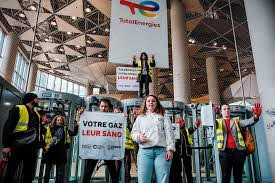
At the time of writing, around 20 companies, such as TotalEnergies, EDF, Danone, BNB Paribas and La Poste have received a formal notice to comply with the Vigilance Law. The inadequacy of their answers has already led several NGOs to require an injunction. But, until December 2023, all claims made under the Law had been rejected by the courts.
The EDF, TotalEnergies and Suez cases were deemed inadmissible (TJ Paris, 30 nov. 2021, n° 20/10246, EDF. ‒ TJ Paris, 1er juin 2023, n° 22/07100, Suez. ‒ TJ Paris, 6 juill. 2023, n° 22/03403, TotalEnergies). But what is most open to criticism is not the fact that the judges dismissed these cases; it is the reasons why they did it. In these decisions, the Court was excessively critical of the law: for instance, in the “TotalEnergies/Ouganda” case (pp.17-18), the judges argued that the “duty of vigilance” was too vague and too difficult to apply especially because so far no decree had been issued by the government to guide them. This statement is questionable: firstly, the judge can easily rely on the UNGPs and on the OECD Guidelines for Multinational Enterprises to interpret the duty of vigilance; secondly, vagueness may actually be more a strength than a weakness because it allows adaptation to a specific situation; and thirdly, there is an inevitable element of judicial interpretation in judicial decisions. The judge, by using the controversial expression “monumental goals” in relation to the Law, also gave the impression that it is too far-fetched for business actors to conduct human rights due diligence; whereas in reality the Law simply required them to adopt reasonable measures to prevent human rights abuses in their activities. Most importantly, in their first decisions, judges focused excessively on procedural questions (whether civil or commercial courts were competent to hear claims based on the Law; the relationship between the formal notice against the company and the legal action, etc). These procedural issues have contributed to delay the enforcement of the substance of the law which is not acceptable when human rights are at risk.
Toward better enforcement?
Nevertheless, the attitude of the judge toward the Vigilance Law seems to be evolving. The primary reluctance of the interim relief judge is progressively giving way to a greater willingness to entertain the substance of the complaints. Two examples illustrate this change: the “La Poste” ruling and the two positive decisions in the “Total/climate” and “EDF/Mexico” cases handed down by the Paris Court of appeal.
The “La Poste” case is instructive because for the first time, the judges focused on the merits meaning that the court proceeded to an in-depth analysis of a vigilance plan. The judges considered that La Poste did not meet its obligations under the Law and then ordered the company to amend its vigilance plan (TJ Paris, 5 déc. 2023, n° 21/15827).
In June 2024, the dedicated chamber of the Paris Court of Appeal ruled that the claims made against TotalEnergies and EDF were, after all, admissible (CA Paris, 18 juin 2024, n° 23/14348, TotalEnergies. ‒ CA Paris, 18 juin 2024, n° 21/22319, EDF). The Court made important procedural clarifications that should make it easier for claimants to obtain injunctions in the future. In this regard, setting up a dedicated chamber in January 2024 was a positive initiative. This chamber will grow an expertise in the BHR field and is likely to be able to develop more promising case law on these complex legal issues, which are at the crossroads of law and economy.
II/ But it’s still a long way to go…
Since 2017, all cases except for the “la Poste” ruling have focused on procedural arguments. This has seriously undermined the “spirit” of the Vigilance law which is to prevent human rights abuses. It is high time to focus on the merits and to apply the Vigilance law in line with what it was really adopted for: protecting human rights and the environment against business activities negatively impacting them.
Besides, it is important to mention some unaddressed issues. As mentioned before, the Vigilance Law also provides for a remediation process if damage occurs (L.225-102-5 French commercial Code). This process raises challenges and practical questions: for instance, the burden of proof is on the victims. Accordingly, claimants will have to prove that: i) the company has breached its duty of vigilance; ii) and the existence of a causal link between the damage and the breach of its obligation. Moreover, claimants often face difficulties in accessing information proving that the company was negligent. Therefore, many scholars and NGOs have requested a shift in the burden of the proof. In this regard, the CSDDD could be a source of improvement as article 29 allows the judge to order the disclosure of additional evidence lying in the control of the company. Another issue relates to private international law: is the French due diligence law applicable when damage occurs abroad? In private international law, the applicable law is normally the Lex loci delicti, meaning the law of the place where the infraction is committed. Following this rule, if a violation of human rights occurs in India, the Indian law should be applied. On this aspect, the Vigilance law is not clear.
Much remains to be done to make the Vigilance law effective in practice and for victims to receive some compensation. In this regard, introducing a supervisory authority, as required by the CSDDD, could be a source of improvement.

Leave a Reply