




Introduction
Advocates for the adoption of stringent laws building on a human rights and environmental due diligence (HREDD) approach have argued that new legal rules represent an important measure for providing victims of company malpractices with access to remedy and for holding multinational companies accountable for the negative externalities of their subsidiaries and global supply chains (see Gustafsson et al. 2023).
Stakeholders and rightsholders from the Global South have not played an influential role in policy-making processes on HREDD laws and the institutional design of the laws has been criticized for being rather weak in terms of measures for providing access to remedy (Dehbi and Ortega 2023; Deva 2023; . Despite this, new laws offer additional opportunities for victims of environmental damages and/or human rights violations, as well as civil society organizations (CSOs) to file complaints to competent authorities (e.g., in Germany) or to bring lawsuits in the home country of large companies (e.g., in France).
Legal Actions Under the French Duty of Vigilance Law
We have had a closer look at the legal actions that were taken under the French Duty of Vigilance law (2017) so far. The enforcement of this law is primarily dependent on strategic litigation by CSOs and/or affected stakeholders, through requests for court-issued injunctions or civil liability claims. The latter can be used for filing lawsuits against companies to French Courts in cases where claimants argue that severe damage could have been prevented by more adequate HREDD systems. More concretely, we explore how CSOs from France and Brazil that have been involved in several of the cases have perceived and experienced the lawsuits and the political contestations surrounding them. Brazilian CSOs have been particularly active in discussions around HREDD, which is why much can be learned from them. We also analyzed vigilance plans of French agri-food companies and conducted interviews with company representatives about the ways they comply with the French law and their relationships with CSOs from France and diverse producing countries (Schilling-Vacaflor and Gustafsson 2024).
As at 15 October, 2024, 13 lawsuits have been filed by civil society organizations under the French Duty of Vigilance law, along with at least ten formal notices. Three of the ongoing legal cases involve multinational enterprises that have been accused of causing or contributing to human rights violations and/or severe environmental damages in Brazil. The first lawsuit was filed against the supermarket Casino Group, accused of failing to ensure that its Brazilian subsidiary prevented the sale of meat in Brazil from farms involved in illegal deforestation and the violation of Indigenous Peoples’ land tenure rights. The second lawsuit targets BNP Paribas, Europe’s largest bank, for allegedly funding slaughterhouses that processed cattle from areas where illegal deforestation occurred. The third legal action is a formal notice against McDonalds France, regarding alleged violations of workers’ rights in Brazil. If not resolved satisfactorily, the case could soon escalate into a lawsuit.
Perspectives from Interviewees
Our interviewees from French and Brazilian CSOs have expressed skepticism about the potential outcomes of the legal cases. They have faced significant challenges in winning transnational lawsuits, such as the lack of preparedness of the competent Paris court to handle these cases effectively, difficulties related to the burden of proof, which falls on the victims, uncertainties regarding how judges will interpret Human Rights and Environmental Due Diligence (HREDD) obligations, and numerous practical and procedural hurdles in the legal process.
Nevertheless, many of our interviewees reminded us that we should not narrowly focus on the lawsuits, but see them in the broader context of the campaigns that have surrounded them, and, potentially, are more impactful. A plaintiff from a Brazilian grassroots organization argued:
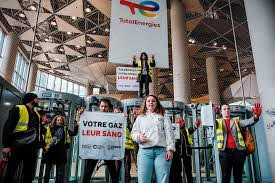
“So we know that the process of representing interests at international level takes a long time. We are aware that everything is an argument to delay the deadlines. In fact, the pace that the courts set for deliberating these cases is exasperating. But I think it helps us to produce information, create visibility and expose companies. Several actions have been organized on the street and demonstrations in front of the headquarters of BNP, Casino, etc. In short, I don’t think the legal outcome of the case gives us much hope. But it is an opportunity to get things moving in a very interesting way” (interview, March 2024).
We also learned that the political contestations surrounding new laws have contributed to strengthening existing alliances between Brazilian and international CSOs. Grassroots organizations working closely with local communities and victims of human rights violations told us that they have participated in the filing of lawsuits to the Paris court due to their improved relationships with international environmental and human rights NGOs as well as with actors such as investigative journalists and data scientists, who helped them to present their evidence in a more professional way.
Moreover, according to our interviews and conversations with Brazilian experts in April 2024, the adoption of HREDD laws has contributed to prepare the ground for better traceability systems of supply chains from Brazil, as well as to increasing efforts by CSOs to monitor the adverse environmental and human rights impacts related to transnational business activities. For instance, Brazilian CSOs in collaboration with the Brussels-based NGO FERN have been working on establishing an Observatory on human rights impacts related to the production of agricultural commodities, with the aim of improving corporate accountability in global supply chains. The organizations participating in this initiative also hope that better traceability and monitoring systems will help to strengthen domestic human rights and environmental policies in Brazil.
Our data also reveal that the adoption of HREDD laws has contributed to some changes in the ways companies respond to complaints and grievances, such as by providing more justification about their due diligence systems, excluding suppliers from their supply chains or organizing additional audits. Especially consumer-facing companies tend to take CSO complaints more seriously due to fears of legal and reputational risks. However, it is still unclear how effective company responses to complaints actually are. A representative from an environmental NGO working in Brazil reflected upon his experiences to pressure companies to adopt more meaningful HREDD systems in a pessimistic tone: “We know that they are implementing some tools to make things better. But this is mainly for us and other organizations, the public or their clients. They do not really improve.“ (interview, March 2024).
Conclusion
Overall, more context-sensitive research in producing countries is needed to study the actual outcomes of complaints and litigation processes under HREDD laws. This issue is relevant beyond the France. Notably, the recently adopted Corporate Sustainability Due Diligence Directive (CSDDD) will soon enter into force in the entire European Union (EU) soon, meaning that civil liability in relation to corporate accountability and HREDD will become much more common in the future. It is high time to shift our attention to how rightsholders from the Global South and their allies can effectively use existing grievance mechanisms and litigation to get access to remedy, and thereby also contribute to transform irresponsible and/or ecologically unsustainable business models. Understanding the opportunities and limitations of emerging HREDD regimes is essential for fostering more just and sustainable business practices.


Leave a Reply