


Introduction
The OECD’s network of National Contact Points (NCPs), which implements the OECD Guidelines for Multinational Enterprises on Responsible Business Conduct (RBC), is approaching its thirtieth anniversary. Over this period, the prominence of NCPs has grown and they have developed in several directions, including the promotion of RBC. In parallel, there has been a growing research interest in the intersection of business and human rights.
Concurrently, the number of interstate and internal conflicts rose to 61 conflicts recorded across 36 countries last year according to the Peace Research Institute Oslo (PRIO) report. This means year 2024 marked a new record: the highest number of state-based armed conflicts witnessing a surge in violence not seen since World War II. Countries experiencing armed conflict, civil war or severe instability typically suffer from widespread violence, institutional weakness, serious human rights violations and social division. In such situations, weak rule of law may be exploited by both domestic and transnational corporations to disregard the rights of vulnerable populations or to exploit local natural resources.
Given this characterisation, it is logical that NCPs should play a critical role in promoting RBC in line with the OECD Guidelines in conflict-affected and high-risk areas. This is particularly important in such environments due to the heightened risks of human rights abuses, environmental harm and weak governance. However, the role of OECD NCPs in conflict-affected states and their activities to promote RBC have received little attention. The ongoing escalation of the Israeli–Palestinian conflict provides an illustrative case study of NCP activities in one of the world’s longest-running and most violent disputes.
NCPs as mediators in conflict-affected regions
The OECD NCPs are government entities established by countries that have adopted the OECD Guidelines. There are 52 adhering countries, all of which are required to have an NCP to promote the OECD Guidelines and handle grievances, known as ‘specific instances’. In order to fulfil this task, NCPs act as a non-judicial grievance mechanism through which stakeholders can raise complaints about companies that are allegedly breaching the OECD Guidelines. NCPs can therefore also help to mediate disputes involving companies operating in conflict-affected regions, and deal with various issues including human rights violations, forced displacement, environmental degradation and involvement with armed groups.
The important thing is that the NCP network truly has a global reach as NCPs can handle specific instances involving companies operating ‘in or from’ their countries (i.e. activities of companies headquartered in their country but active in any other country). This extends NCPs´ authority beyond OECD members and adherents of the OECD Guidelines, which are not usually the most conflict-affected countries. As such, they can handle cases involving business activities in conflict zones in non-adherent countries (which do not have their own NCP). In other words, NCPs can accept complaints involving a company operating in or from their country, even if the harm occurred in a conflict-affected state. In conflict-affected settings, this mechanism can provide a unique opportunity for redress where formal justice systems may be ineffective or unavailable.
This unique combination enables NCPs to review a wide range of business activities, including politically sensitive issues in the Israeli–Palestinian conflict, such as settlements, demolitions and NGO affiliations.
Specific Instances Related to Palestinian Territories
Until recently, NCPs dealt with specific cases relating to situations in Myanmar or the Democratic Republic of Congo, but since the 2010s, there has been an increasing number of cases concerning the situation in the Palestinian territories, reflecting the escalating tensions between Israel and Palestine.
The first complaint was submitted to the Ireland NCP in 2011 by the Ireland-Palestine Solidarity Campaign, an NGO, which claimed that CRH (the largest company in Ireland and politically very influential) through its jointly owned subsidiary Nesher Cement Enterprises, had violated human rights provisions under the OECD Guidelines by supplying cement for the Separation Barrier in the Palestinian territories. Following an initial assessment that began in May 2011, the company divested its entire interest in the cement producer in December 2015. In light of this development, the Irish NCP closed the case in February 2016 without issuing a final statement.
In November 2013, the United Kingdom NCP received a complaint from the NGO Lawyers for Palestinian Human Rights (LPHR), which alleged that the security company G4S was breaching the general policies and human rights provisions of the OECD Guidelines in Israel and the Palestinian territories. LPHR claimed that certain G4S equipment, facilities and operations were in breach of, or associated with breaches of, international human rights laws and principles. The UK NCP offered mediation to the parties, but G4S declined. Nevertheless, based on its own investigations, the NCP found that the company had failed in its obligation to ‘respect human rights’ and to ‘prevent or mitigate adverse human rights impacts that are directly linked to its business operations’ in the region. In its final statement of March 2015, the NCP made a series of recommendations to the company, particularly regarding the need to conduct comprehensive human rights due diligence. However, in its follow up observation, it expressed that it is “disappointing” that G4S did not take the opportunity to address the NCP’s findings and recommendations and even issued ‘misleading’ public response to the final statement.
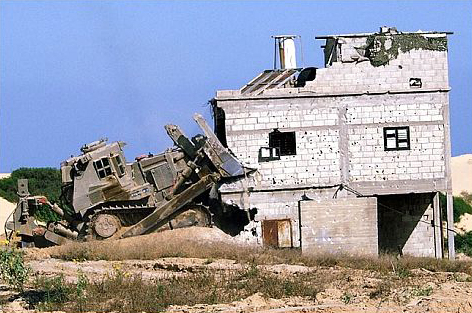
In December 2019, LPHR submitted a second complaint to the UK NCP, this time against J.C. Bamford Excavators Limited (JCB). The company’s construction machinery was allegedly used to demolish Palestinian property and expand Israeli settlements, potentially violating human rights obligations under the OECD Guidelines. In its initial assessment, the NCP found that the company’s due diligence and business relationship processes warranted deeper examination. In November 2021, the UK NCP concluded that JCB had not breached the OECD Guidelines by virtue of its relationship with Comasco, JCB’s exclusive Israeli dealer, but had failed to observe the Guidelines by not committing to respect human rights and by not carrying out human rights due diligence in its supply chain. However, doubts remain about improvements within the company, as Amnesty International has documented alleged misuse of its machines in the demolition of Muslim people’s properties in India in 2024.
Interestingly, another complaint submitted to the UK NCP in October 2019 took the opposite stance in the conflict. UK Lawyers for Israel (UKLFI) complained about the global network of PricewaterhouseCoopers (PwC), in relation to audit services provided to two NGOs, the Union of Agricultural Work Committees and Defence for Children International – Palestine, in the Palestinian territories in the case of a multi-donor trust fund for the support of the Palestinian Recovery and Development Plan (PRDP). UKLFI alleged that donor funds were used to pay salaries to prisoners held for terror offences in Israeli jails while PwC had from 2009 until 2015 annually audited the cash transfers in and out of a PRDP bank account. By this audit work, PwC allegedly breached the General Policies (related to due diligence), Disclosure and Human Rights chapters of the OECD Guidelines During the specific instance procedure both parties declined the agreement offered by an appointed mediator and as result, in September 2021, the NCP published its final statement, concluding that PwC had not breached the OECD Guidelines. However, it was recommended that PwC recognise the OECD Guidelines as a global standard and embed RBC across all network firms’ policies, codes of conduct and due diligence frameworks, even in countries that do not adhere to them.
The last complaint regarding the Palestinian territories was submitted to the Spanish National Contact Point (NCP) in 2021 by the Spanish NGO Comité de Solidaridad con la Causa Árabe (CSCA). It raised the issue of the involvement of the Spanish construction company Construcciones y Auxiliar de Ferrocarriles (CAF) in a light rail project in East Jerusalem. According to the complainant, by supplying components for the project, the company breached multiple chapters of the OECD Guidelines, including those relating to general policies, human rights, labour relations, disclosure, competition and taxation. The Spain NCP accepted the case, however, the company rejected the offer of ‘good offices’. Consequently, the NCP issued a final statement in May 2022, which included several recommendations for the company: enhancing internal policies and codes of conduct concerning human rights; revising disclosure practices; commissioning an independent social impact assessment; and reminding suppliers and partners to adhere to the OECD Due Diligence Guidance for Responsible Business Conduct.
Conclusion
An overview of cases related to the Palestinian territories and handled by NCPs reveals a variety of issue areas. The cases covered diverse sectors, from construction and infrastructure to auditing and equipment supply, and raised issues ranging from human rights and disclosure to taxation and environmental concerns. Some companies were directly involved (JCB) while others were linked through services (PwC), or shares (CRH). The overview also provides a complex picture of multiple jurisdictions handling different commercial activities in one conflict zone. So far, NCP cases related to the Palestinian context have involved three adherent countries: Spain, the UK and Ireland. Cases have spanned the Occupied Palestinian Territories as well as the Palestinian Authority.
On a less positive note, their outcomes reflect the procedural realities of the NCPs as a grievance mechanism. Some were not accepted or were closed due to changes in the corporate context (CRH). Others led to recommendations for improving internal policies (JCB, CAF). Some cases found no breach, but the process was still leveraged to promote best practices globally (PwC). Accordingly, the reviewed NCP specific instances, despite their non-binding nature, provide an important guidance on responsible business conduct and compliance with the OECD Guidelines in a region of heightened political tension, military conflict and disputes between the Palestinian Authority, Israel, and Arab countries.
Given the rapidly deteriorating situation in Palestine and the resulting global focus on the conflict, we can expect civil society in OECD countries to pay closer attention to the commercial activities of companies involved and their corporate responsibility. Businesses, and the NCPs reviewing their conduct, should be aware of these developments and apply heightened, conflict-sensitive due diligence in line with the OECD standards that have expanded over the last decade.

Leave a Reply