




Introduction
France is often regarded as a pioneer in Europe in terms of corporate sustainability. The French Vigilance Law (2017) plays an important role in this. Being the first example of its kind, it still stands out as the “best known and most far-reaching” national due diligence law. Challenging the traditional boundaries of corporate liability, it was designed to prevent human rights abuses and environmental harm, both within and beyond France’s borders, while ensuring access to justice and remedies for the affected victims.
The French Vigilance Law is particularly significant as it served as a model for the European Union to draft the Corporate Sustainability Due Diligence Directive (‘CSDDD’). However, its interpretation and enforcement in the courts were unknown in its early years, with the first court decision on the substance of the vigilance duty emerging only in December 2023 with the Sud PTT v. La Poste case. Furthermore, in the initial years following the law’s adoption, it was reported that some companies lacked a vigilance plan altogether, while others had plans that were too vague and failed to adequately address identified risks or violations.
These early challenges with the French Vigilance Law offer valuable insights that can positively influence the interpretation and enforcement of the CSDDD. This blog post will examine the issues which may have delayed the French Vigilance Law from reaching its objectives. Our findings show that if the EU can establish clear guidelines, a consistent approach across Member States and strong enforcement mechanisms, it will enhance the impact of the corporate sustainability due diligence.
Pre-enforcement mechanisms
Developing a unified understanding of the law throughout the EU
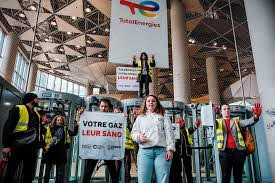
One of the main criticisms directed against the French Vigilance Law concerns its short and vague formulation that has contributed to its long-delayed application in courts to factual cases. Together with the absence of an implementing decree or guidelines that accompany the law, the obligations entailed by the duty of vigilance have remained obscure from the law’s inception. Consequently, claimants faced a prolonged period of trial and error just to understand how to successfully initiate a case against companies under the French Vigilance Law. The case of Notre Affaire à Tous and Others v. Total, for instance, exemplifies how the litigation processes can take several years in different courts, resulting in varied rulings (here and here) discussing the admissibility of the case due to the uncertainties regarding the application of the French Vigilance Law.
In light of these challenges, the EU could address matters related to the procedural and material aspects of the CSDDD by proactively offering clear guidelines. Given its broad requirements and extraterritorial scope, clarification of certain matters may be crucial, especially at the beginning of its implementation. Being aware of this, the European Commission has already published a document on frequently asked questions on the CSDDD.
Importantly, Article 19 of the CSDDD empowers the European Commission to issue general and sector-specific guidelines on certain issues, such as climate transition plans. By proactively developing these guidelines, the EU can help ensure the consistent application of the CSDDD and prevent prolonged legal debates over procedural uncertainties. In ensuring consistent application of the CSDDD, the European Network of Supervisory Authorities (Article 21 CSDDD) can also play a crucial role in terms of coordinating the practices of the national supervisory authorities, providing harmonised guidance on the application of the law and facilitating cross-border cooperation to avoid exploitation of jurisdictional gaps. This will help prevent diverse outcomes among jurisdictions not only at the level of national courts but also at the level of supervisory authorities.
Making use of the notification mechanism and complaints procedure
The CSDDD is primarily preventative rather than punitive. In this context, the notification mechanism and complaints procedure (Article 14 CSDDD) emerge as an important process in terms of revealing non-compliance with due diligence obligations under the CSDDD. Certain stakeholders (Article 14, paragraph 2 CSDDD) can use this procedure when they have legitimate concerns regarding actual or potential adverse impacts concerning the companies’ own operations, the operations of their subsidiaries, or the operations of their business partners in the chains of activities of the companies. This is very similar to the formal notice procedure provided under the French Vigilance Law.
However, there is a key difference between the two. Under the French model, issuing a formal notice to the company is provided as a prerequisite for filing an injunction claim in court. As a result of this, claimants can go before the court only if the company fails to comply with the received formal notice within three months. Conversely, the CSDDD explicitly states that the submission of a complaint is not a prerequisite for having access to the procedures under Articles 26 and 29 or to other non-judicial mechanisms (Article 14, paragraph 7 CSDDD). This means that under the CSDDD, parties are not required to notify the company before initiating any type of legal proceedings. Compared to the French model, where the formal notice is a condition of admissibility for injunction claims, as confirmed by the Paris Court of Appeal, this difference in the legislative configuration of the CSDDD can be expected to further facilitate litigation for potential claimants as it eliminates an additional procedural step.
Enforcement mechanisms
Private enforcement
The French Vigilance Law depends heavily on private enforcement through civil courts, based on claims by private parties. Under Article L. 225-102-4 II of the French Commercial Code, “any interested person” can request the court to order a company to comply with its duty of vigilance or seek compensation for damages caused by a company’s breach of the vigilance duties as outlined in Article L. 225-102-5 of the French Commercial Code. The introduction of the civil liability regime was seen as a crucial complementary mechanism to the vigilance duty as it enabled enforceability, in contrast to the UN Guiding Principles (‘UNGPs’) and OECD Guidelines, which are, in principle, not legally binding on companies.
Nevertheless, the judicial interpretation of the French Vigilance Law has been narrow in the first five years since its implementation, with an overfocus on the admissibility of the cases. The first injunction requests (TotalEnergies, EDF and Suez) were all found inadmissible on the basis of the courts’ strict interpretation of the requirements for the formal notice procedure.
The French example illustrates how the content of vigilance duties can be constrained by procedural formalities during the litigation phase, potentially resulting in prolonged cases.
To avoid this, European courts should strive to uphold the main aim behind the CSDDD, which is to establish a legal framework that can promote and foster sustainable and responsible corporate behaviour throughout global value chains. Future judicial interpretations at the national level should align with this overarching objective and should not increase the administrative hurdles faced by claimants, as occurred in France. A more holistic approach by the courts can prevent the CSDDD from becoming mere box-ticking compliance legislation. This can be attained by seeing the CSDDD as not merely a prescriptive set of rules but rather a transformative tool for promoting sustainable businesses. The interpretation of the CSDDD in alignment with the international framework established by key documents, such as the UNGPs, OECD Guidelines and the Paris Agreement, and supported by scientific insights, especially on climate change, as provided by reliable institutions such as the Intergovernmental Panel on Climate Change (‘IPCC’) can provide a good direction in this regard. The decision of the Hague District Court in the Milieudefensie v Shell case serves as a great example of this approach as the court incorporated international standards and scientific evidence in shaping the corporation’s duty of care to the broader society. Similarly, incorporating these elements into interpretations of the CSDDD can enhance its potential to fulfil the sustainability objectives that create the foundation of this legislation in the first place.
Public enforcement
In terms of public enforcement, the CSDDD has an important difference from the French Vigilance Law as it utilizes public enforcement through supervisory authorities appointed by Member States (Article 24 CSDDD). The main task of these authorities is to oversee the proper implementation of companies’ due diligence obligations. In this regard, they have the power to request information from companies and to conduct investigations related to non-compliance with the CSDDD. These investigations can be initiated either independently, on their own initiative, or by natural and legal persons who have substantiated concerns on an objective basis that a company is failing to comply with the due diligence requirements (Article 26 CSDDD).
If the supervisory authorities determine that there is an infringement of the provisions of national law adopted under the CSDDD, they can impose penalties, including “naming and shaming” and fines up to 5% of a company’s net worldwide turnover (Article 27, paragraph 4 CSDDD). These powers make the supervisory authorities strong enforcement agencies of the CSDDD. Moreover, supervisory authorities should use their powers to adopt a proactive and risk-based approach rather than relying solely on reactive measures in response to reports of breaches. By actively monitoring and addressing compliance gaps, national authorities can significantly enhance the enforcement of the CSDDD.
It remains to be seen whether the supervisory authorities can play a complementary role in the enforcement of the CSDDD, particularly if private litigation does not generate the expected outcomes or faces procedural delays as experienced during the early years of the French Vigilance Law. A complementary role would be welcomed, as it will promote greater corporate accountability in relation to sustainability matters and can reduce overreliance on private enforcement.
In contrast to the CSDDD, the French Vigilance Law did not establish a public authority to ensure compliance with vigilance duties, potentially reflecting the scepticism that such oversight might weaken corporate accountability by reducing vigilance to a mere compliance exercise. Due to uncertainty over the jurisdiction of courts, le tribunal judiciaire de Paris was granted exclusive jurisdiction over the claims related to the duty of vigilance. Recently, in September 2024, the 34th chamber (chambre de la régulation sociale, économique et environnementale) was created as the dedicated chamber for the disputes arising from the French Vigilance Law as well as similar disputes in social, economic and environmental matters. The creation of this chamber can be perceived as a positive development, as it acknowledges the unique nature of this type of litigation and the considerable stakes involved. The dedicated chamber is expected to improve judicial scrutiny. It also signals a commitment to addressing the complexities inherent in corporate sustainability due diligence and relevant matters. Yet, there has not been a sign of a specific administrative authority tasked with enforcing the French Vigilance Law.
This, however, is soon to be changed since Member States are required to appoint supervisory authority under the CSDDD. In France, there has been a lively debate whether the Autorité des marchés financiers (‘AMF’) should be assigned as the national supervisory authority for the CSDDD, or if an ad hoc, independent administrative authority should be established for this purpose instead to ensure that the authority is equipped to handle the complexities of corporate sustainability due diligence. A final decision, however, has yet to be reached.
Conclusion
In conclusion, the comparative analysis of the French Vigilance Law and the CSDDD reveals differences that the EU can leverage to strengthen the implementation of corporate sustainability due diligence across the Member States. As the EU now moves forward with the CSDDD, it has the opportunity to promote sustainable business within and beyond the EU, potentially more effectively and quickly than the French Vigilance Law. This can be achieved by ensuring clarity of the rules, consistency in applications across the Member States, and establishing effective enforcement mechanisms to support potential claimants.

Leave a Reply