



Human rights and environmental due diligence (HREDD), having developed from the concept of human rights due diligence (HRDD) as outlined in Principle 17 of the UN Guiding Principles on Business and Human Rights (UNGPs), refers to the process through which companies can identify and assess potential and actual human rights and environmental risks arising from their own operations and within their supply chain, with a view to preventing, mitigating, and accounting for how they address and remedy such impacts. The French Duty of Vigilance Law is one of the first attempts at legalising the concept of HREDD in Europe. Adopted in 2017, the French law applies to French companies and their subsidiaries based in France and abroad meeting the employee thresholds of five thousand employees and ten thousand respectively. These companies must engage with HREDD through the adoption of a vigilance plan, which under article L. 225-102-4-I, must allow companies to identify, assess, prevent, monitor and mitigate both potential and actual impacts arising from their own operations, and within their supply chain. But how is the French Law performing following five years of implementation? Drawing from my recent co-authored article, which analysed European mandatory HREDD (mHREDD) laws from the perspective of human rights, the environment and Third World Approaches to International Law (TWAIL), this blog reiterates that the French law’s conceptualisation of HREDD seems to promote, rather than address injustice. Examining this through the lens of TWAIL, this becomes apparent when considering the French Law’s provisions on impacts, monitoring, and rightsholder engagement, all of which do little to reform corporate power and conduct.
Defining TWAIL
TWAIL is a methodology, theory, movement, network, and approach encompassing “a broad dialectic (or large umbrella) of opposition to the generally unequal, unfair, and unjust character of an international legal regime that all-too often (but not always) helps subject the Third World to domination, subordination, and serious disadvantage.” International law has historically been utilised to benefit Global North States and corporate activity at the expense of the Global South, including through legal doctrines that justified the theft of indigenous lands (terra nullius) or the control of territories and populations by chartered companies. Acknowledging this history is important because such doctrines have outlived the colonial empires of the past and shaped the foundations of our international legal order, establishing patterns of economic and political dominance that persist to date. This is apparent even in national legislation, which can still perpetuate existing power-imbalances to the detriment of global south states and peoples, and undermine the justice and accountability it seeks to promote. This is relevant to consider as the French law, like many European mHREDD frameworks, has extraterritorial dimensions in its design and application, covering foreign subsidiaries and impacts across companies’ entire supply chains (art L. 225-102-4-I). Whilst this extraterritorial applicability may be consistent with the emerging state obligation to prevent and punish corporate human rights and environmental violations committed abroad, concerns remain.
Definition of impacts
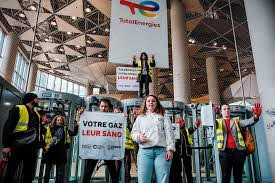
How human rights and environmental impacts are defined influences how companies implement due diligence and the degree to which impacts are addressed. The French law, whilst providing that companies must address both human rights and environmental impacts in their vigilance plans, fails to define what constitutes both. Such an approach reflects a Eurocentric understanding of the relationship between human rights and the environment—that the two are distinct—which has dominated the international framework. This Eurocentric approach is not only text-deep, but influences the conduct of companies, and how potential and actual impacts on rightsholders are managed. This can manifest in the prioritisation of impacts which companies deem important over others. For example, Schilling-Vacaflor notes that French companies involved in Brazilian soy and beef supply chains prioritised impacts that were important to Global North states, such as deforestation or labour rights, whilst neglecting those impacts that were of concern to local communities in Brazil, such as biodiversity loss and rights to water, health or food. Alternatively, companies may refer to a limited scope of human rights and environmental risks, or distinguish between the two, therefore failing to appreciate the human-rights-and-environment-relationship. The result is the implementation of vigilance plans that are inadequate in preventing and mitigating human rights and environmental impacts. For example, in the context of the ongoing lawsuit against Total by Ugandan communities for alleged impacts arising from its Tilenga and EACOP oil projects, Total’s vigilance plans have referred to a limited scope of human rights and environmental risks, particularly those concerning industrial health and safety, labour rights, local communities’ health and their access to land (as evidenced in the 2018, 2019, 2020, 2021, and 2022 plans). These risks are referred to in general terms, with no linkage to specific operations or projects, thus making the implementation of specific measures to prevent or address risks impossible. Furthermore, human rights risks and environmental risks are distinguished from each other, with any link being implied only in the context of human health. This suggests a lack of understanding of the relationship between human rights and the environment, given that this relationship transcends human health concerns. An integrated and less Eurocentric definition of these impacts would reflect this relationship, and be inclusive of local approaches to human rights and the environment protection.
Monitoring
Under the French Law, monitoring of companies’ implementation of their vigilance duties is undertaken by companies themselves (art L. 225-102-4-I), equivalent to the “tracking of responses” under Principle 20 of the UNGPs, There exists no mechanism for oversight of companies (akin to Principle 5 of the UNGPs), with such an opportunity arising only through the lodging of complaints (via formal notices and civil litigation) by civil society or rightsholders for non-compliance with vigilance obligations (art L. 225-102-4-I). This framing of monitoring seems reminiscent of the power-hierarchy exercised by charter companies of colonial empires. In both cases, a sovereign government delegates certain tasks to a private entity to implement and enforce regulatory standards on peoples (and suppliers) abroad. With no oversight by a public body which could engage with local actors abroad including governments, host state authority is diluted as their peoples are regulated by a European law which gives no room for the consideration of local approaches to corporate responsibility. What results is the strengthening of corporate power over states and peoples, rather than the challenging of it, as due diligence becomes a business-centric exercise in which companies set the parameters by which to assess their own performance, as well as that of their subsidiaries and suppliers. Relying on corporate monitoring alone leads to little change corporate conduct, and in promoting justice. For example, in the context of the Total EACOP litigation, little improvement in the scope and content of Total’s vigilance plans has been documented; risks are still referred to without any specificity. Furthermore, despite being informed of human rights and environmental risks by civil society, little action has been taken to address impacts on rightsholders.
Rightsholder engagement
Rightsholder engagement forms an important part of the due diligence process, providing an opportunity for rightsholders to make their voice heard as to how businesses’ operations impact them and how best to avoid and remedy such impacts. In practice rightsholder engagement is often superficial (if at all), having been reduced to engagement on a single occasion or with a single group of rightsholders and stakeholders, or with stakeholder organisations that represent affected rightsholders. Such a problem persists even with mHREDD legislation, especially in the French law which provides for limited engagement, only during the development of the vigilance plan and risk alert mechanism, where companies should engage with company stakeholders and trade union representatives (art L. 225-102-4-I). There is no requirement to engage with rightsholders, leading to inadequate engagement by French companies. Consultations have either failed to fully inform rightsholders, have disregarded rightsholders concerns, or have featured engagement between companies and selected individuals rather than a wide-scope of rightsholders. Of particular concern is the complete disregard for meaningful, free, prior and informed consent (FPIC) when engaging with local and indigenous communities, as highlighted in the ongoing case of Union Hidalgo and Others v Electricité de France.
Reflections for the way forward
The French law requires reform if it is to challenge corporate power, conduct and injustice in supply chains. Such a reform is likely in the foreseeable future, as the adoption of the European Union (EU) Corporate Sustainability Due Diligence Directive, may require changes to ensure that French law is compliant with EU law. Any reform of the French Law must include the introduction of provisions concerning (1) a redefinition of human rights and environmental impacts which clearly communicate the link between the two and is broad enough to be inclusive of local approaches; (2) monitoring by public bodies in addition to companies’ own monitoring; and (3) obligatory meaningful and effective engagement with rightsholders at all stages, based on principles that already exist in international law, (such as access to information, public participation, and FPIC when engaging with Indigenous Peoples).

Leave a Reply