


Introduction
Ten years after the collapse of the Fundão dam caused devastating environmental damage in the Doce River basin, the question persists: can a parent company extract profit from hazardous operations conducted through its subsidiaries while externalising responsibility when disaster strikes? The successful outcome of the UK High Court proceedings indicates that parent companies may no longer rely on corporate form to separate economic benefit from legal responsibility.
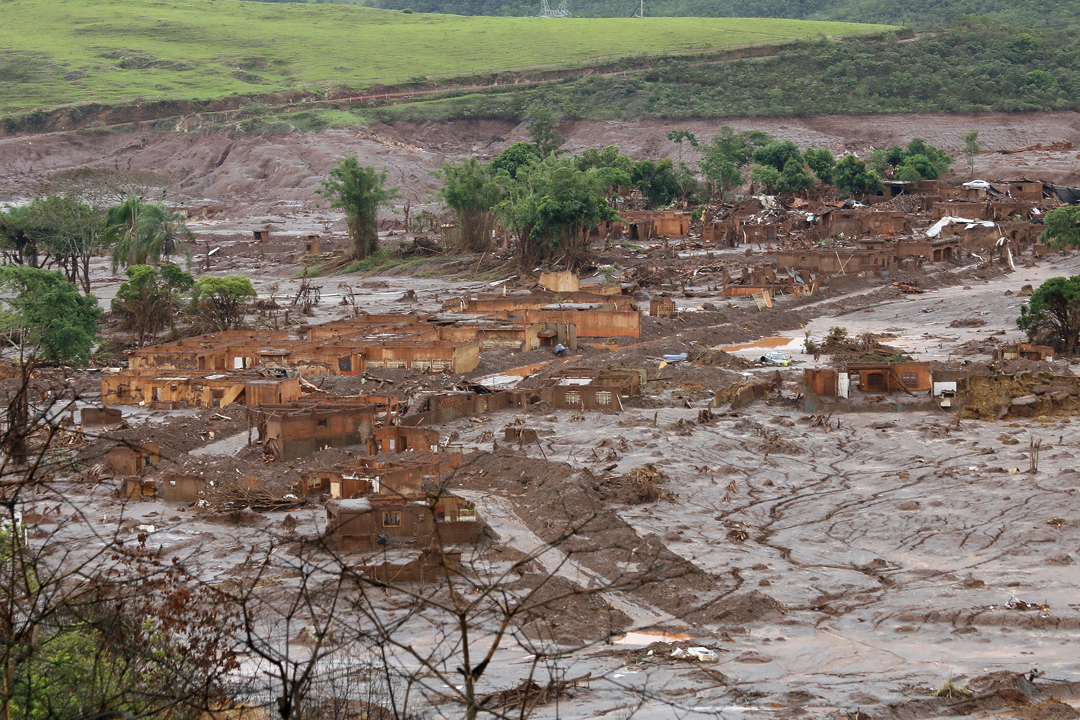
In November 2015,the collapse of the Fundão tailings dam in Brazil killed 19 people and caused severe environmental damage, releasing approximately 45 million cubic meters of iron ore tailings that polluted the Doce River basin and reached the Atlantic Ocean. The failure was caused by liquefaction of the tailings supporting the dam. Claims were brought in England on behalf of more than 600,000 individuals, businesses, and municipalities against BHP Group (UK) Limited and BHP Group Limited. The dam was owned and operated by Samarco, a joint venture equally owned by Vale S.A. (50%) and BHP Brazil Ltd (50%), a subsidiary of the UK-based BHP parent company. The English courts accepted that Brazilian law applied, as the harm occurred in Brazil. The claims, filed in 2018, were struck out by the High Court in 2020 on manageability grounds, the Court holding that their scale and complexity rendered them unsuitable for trial in England and duplicative of the Brazilian proceedings. The claimants appealed the decision. In 2022, the London Court of Appeal allowed the appeal, stressing that the size or complexity of a claim cannot restrict access to justice. It found that there was a ‘realistic prospect of a trial yielding a real and legitimate advantage for the claimants’ sufficient to outweigh the disadvantages in terms of cost, complexity, and the wider public interest in the allocation of court resources.
Following extensive case management, disclosure, and the preparation of expert evidence, a full trial was scheduled to commence in October 2024 and to run for over twelve weeks. In November 2025, the High Court delivered its judgment on liability under Brazilian law, holding that BHP, as the ultimate parent company of the dam operator, was strictly liable as a ‘polluter’ under the Brazilian Environmental Law and additionally liable based on fault under the Brazilian Civil Code.
The High Court judgment in Municipio de Mariana v BHP Group (Mariana Dam case) should be understood as part of a broader judicial and scholarly shift away from formalistic reliance on separate legal personality and towards the recognition of a parent company’s duty of care, grounded in control, assumed responsibility and foreseeable risk. While classical corporate law has long insulated parent companies from liability for subsidiary conduct, except in narrowly defined veil-piercing scenarios, recent court cases reflect a departure from strict adherence to corporate separateness, acknowledging that multinational enterprises (MNEs) may be held responsible in negligence for harms arising from the operations of their overseas affiliates.
Beyond Ownership and Operation: Control as the Basis of Responsibility
The Court rejected the premise that corporate responsibility must follow formal ownership or direct operation. Interpreting Article 3(IV) of the Brazilian Environmental Law, it held that responsibility for polluting activity is not confined to direct corporate ownership or direct operation of the relevant facility (para 524). The Court instead examined how power was exercised within the corporate group, including through governance structures, board oversight, risk management systems, audit processes, funding arrangements, and profit distribution (para 525-531). Applying Article 186 of the Brazilian Civil Code, the Court found BHP liable on a fault-based basis (negligence). Liability did not arise from veil-piercing, but from BHP’s decisive control over Samarco’s operations and negligent exercise of that control. This approach mirrors the UK Supreme Court’s reasoning in Vedanta v Lungowe and Okpabi v Royal Dutch Shell, where parent company duties of care were grounded in operational control and assumed responsibility rather than corporate form.
Corporate Groups as Functional Units
The judgment reflects a growing convergence between judicial reasoning and developments in business and human rights governance. While the UN Guiding Principles on Business and Human Rights (UNGPs) preserve the principle of separate legal personality, Commentary to the principles 13 and 14, emphasises that corporate responsibility to respect human rights applies across the enterprise as a whole. This includes entities within corporate groups where the parent company exercises control through leverage, exerting decisive influence over subsidiaries’ business activities. The UNGPs therefore expect human rights due diligence (HRDD) to be implemented at group level, requiring parent companies to embed group-wide policy commitments, exercise oversight, and use their leverage to prevent and mitigate adverse impacts linked to subsidiaries and controlled entities.
Similarly, the OECD Guidelines, (Chapter II, commentary para 8) stress the responsibility of parent companies and boards to ensure effective risk management, compliance, and risk-based due diligence throughout corporate groups. In practice, OECD National Contact Points (NCPs)—the mediation-based grievance mechanisms established by adhering states—have consistently interpreted the Guidelines as requiring group-wide risk-based due diligence. NCP practice regularly recommends parent companies to identify, prevent, mitigate, and account for adverse impacts arising not only from their own activities, but also from subsidiaries.
Similarly, scholars, here, here and here have reflected on criticism of corporate separateness as obscuring the economic and managerial reality of MNEs as integrated units. The factual findings in Mariana reflect this critique. It documented how Samarco’s governance operated in accordance with shareholder decisions, how board appointments ensured continuous parent company representation, and how BHP participated in committees, audits, funding decisions, and project approvals (para 526). On this basis, the Court concluded that Samarco formed part of a single corporate group encompassing BHP’s Iron Ore business (para 524). Corporate separateness, in this context, functioned less as an expression of economic reality than as a mechanism for externalising risk and responsibility.
Duty of Care and Negligence
Under English law of tort, a parent company may owe a duty of care where there is a close relationship between the parent and subsidiary, the parent knew or ought to have known of unsafe practices, and it was foreseeable that the subsidiary would rely on the parent’s superior expertise. Liability arises where the parent fails to act to the standard of a reasonably competent company in its position and that failure causes harm. Since Chandler v Cape plc, courts have increasingly imposed duties of care where decision-making is sufficiently centralised that subsidiaries cannot operate independently of the parent’s control. The UK Supreme Court in Okpabi confirmed that parent company liability is assessed by ordinary principles of tort law, not by any special test.
In the Mariana dam case, the High Court adopted an analogous approach under Brazilian law. The Court held that BHP’s control of Samarco, assumption of responsibility for risk management, and active involvement in dam operations gave rise to a duty to prevent harm caused by negligent acts or omissions (para 801). The standard of care was assessed by reference to a reasonably competent mining company actively engaged in planning, operation, and risk control.
Although BHP was not the direct operator, the Court found that it had assumed responsibility for identifying, assessing, and mitigating environmental risks through delegated authority within the corporate group (paras 801-802). By August 2014, BHP knew or ought to have known of serious structural and geotechnical risks, including inadequate drainage, repeated safety breaches, the absence of credible stability analyses, and visible signs of instability (para 803). Reliance on third-party stability certificates was insufficient where underlying deficiencies were obvious and should have triggered enhanced scrutiny (para 804).
Conclusion: Implications for Business and Human Rights Normative Development
Read in this light, Mariana dam case strengthens both the doctrinal and normative foundations of parent company responsibility in the UNGPs and the OECD Guidelines. Both frameworks require parent companies to exercise group-level oversight, embed effective HRDD system across the corporate structure, and use their leverage to identify and address adverse impacts throughout the corporate groups.
Mariana dam case confirms that joint-venture structures do not shield parent companies from liability where governance, oversight, and risk management are exercised at group level. The judgment also challenges persistent corporate narratives that portray parent companies as passive investors. The Court emphasised that Samarco was a core asset from which BHP derived substantial financial and commercial benefits. Where parent companies design governance frameworks, approve high-risk projects, oversee risk management, and extract economic value, the allocation of environmental and human rights responsibility becomes a matter of substantive justice rather than corporate form.
Future BHR developments, particularly mandatory HRDD regimes, must therefore move beyond formal corporate separateness and more clearly anchor accountability in parent company control within corporate groups.


Leave a Reply