





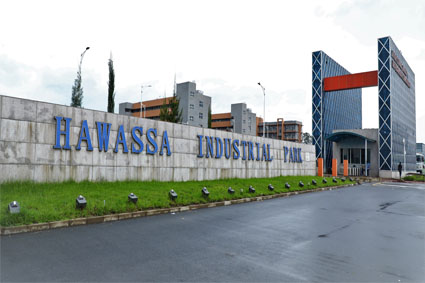
Over the last several years, many apparel factories supplying apparel for internationally known brands such as H&M, Calvin Klein and Tommy Hilfiger have set up operations in Ethiopia. Although the industry is significantly affected by Ethiopia’s suspension from access to the US market through the African Growth Opportunity Act (AGOA) preferential trading scheme and subsequent exit of several big apparel factories, it still holds a central place in Ethiopia’s economy by generating much needed foreign currency and creating many job opportunities.
However, there are concerns that workers in the industry are subjected to various human rights abuses, including payment of extremely low wages. Multiple reports indicated that Ethiopian garment factory workers are the lowest paid in any major garment-producing company worldwide. The New York University Stern Center for Business and Human Rights’ report noted that ‘[t]he government’s eagerness to attract foreign investment led it to promote the lowest base wage in any garment-producing country — now set at the equivalent of $26 a month.’
In 2019, Ethiopia adopted Labor Proclamation No. 1156/2019 that mandated the Council of Ministers to establish a Wage Board with a power to set and periodically revise minimum wages. This is a very commendable step in the right direction considering that the absence of minimum wage in the private sector is the main factor that opened the door for various exploitative practices. However, as the Council of Ministers has not yet acted as required by the law, there is still no established minimum wage in Ethiopia.
The Confederation of Ethiopian Trade Unions (CETU) and the Ethiopian Human Rights Commission have been have been calling on the Ethiopian government to establish a minimum wage that ensures a decent living. In August 2022, the Confederation even met and held discussion with the Prime Minister, including on the need for a fair minimum wage. Although its call has still not been heeded, the confederation continued its call for a fair minimum wage, even more recently after the Ethiopian currency significantly lost its value following Ethiopia’s shift from fixed to floating exchange rate.
The ILO recently indicated that low wage is the main cause of worker’s dissatisfaction and high workers turnover in apparel firms in Ethiopia. It recommended the establishment of a fair minimum wage to prevent high workers turnover, which forces companies to incur substantial expenses in getting and training employees. While this argument appeals to the interest of companies themselves, this post aims to highlight the need for setting a fair minimum wage from a business and human rights perspective.
States’ Duty to Establish and Enforce a Fair Minimum wage
As provided under Principle 1 of the UN Guiding Principles on Business and Human Rights (UNGPs), States must protect against human rights abuses by business enterprises. The States’ duty to protect extends to any rights susceptible to abuse by business enterprises, including the right to a fair wage, which is recognized as part of the right to just and favorable conditions of work. Under the International Covenant for Economic, Social and Cultural Rights (ICESCR) for instance, the right to a fair wage is recognized under article 7 as part of everyone’s right ‘to the enjoyment of just and favorable conditions of work’
What amounts to a fair wage depends on local circumstances as well as the work performed. Under General Comment No. 23, the Committee on Economic, Social and Cultural Rights (CESCR) nevertheless indicated that wages must be “sufficient to enable the worker and his or her family to enjoy other rights such as social security, health care, education and an adequate standard of living, including food, water and sanitation, housing, clothing and additional expenses such as commuting costs”.
With respect to a right to a fair wage, the duty to protect requires states to take measures to ensure that business pay fair wages to their workers. One of the ways in which states discharge their obligation is by enacting and enforcing a law that sets a minimum wage. A minimum wage is ‘the minimum amount of remuneration that an employer is required to pay wage earners……. which cannot be reduced by a collective agreement or an individual contract’ (General Comment No 23, Para 9).
Particularly in countries like Ethiopia, where cheap labor is considered as a main area of comparative advantage, workers are likely be paid extremely low wages unless there is an established fair minimum wage. In this regard, GC No. 23 recommends State Parties ‘to prioritize the adoption of a periodically reviewed minimum wage, indexed at least to the cost of living’. It further provides that ‘failure of employers to respect a minimum wage should be subject to penal or other sanction (para. 14).
In order to discharge its duty to protect, Ethiopia should therefore take measures, including implementing Labor Proclamation No. 1156/2019 that requires the establishment of minimum wage. Ethiopia’s continued reluctance to implement the law; particularly while workers are subjected to the lowest wage in the world during the time of soaring inflation, could constitute a breach of its duty to protect relating to the right to a fair wage.
Business Responsibility to pay Fair Wages
Advocates for a fair wage in the private sector in Ethiopia often focus on urging the government to establish and enforce a fair minimum wage. This focus often sidesteps or ignores the fact that businesses also have a responsibility to pay a far wage, even in the absence of a minimum wage set by the government.
Business enterprises have a responsibility to respect human rights. As indicated under Principle 12 of the UNGPs, this responsibility of business enterprises refers to internationally recognized human rights and the principles concerning fundamental rights as set out in the International Labour Organization’s Declaration on Fundamental Principles and Rights at Work. The CESCR affirmed that the responsibility of business enterprises to respect human rights encompasses the right to just and favorable conditions of work, including the right to a fair wage (General Comment No. 23 para 74).
The Ethiopian Constitution also arguably imposes obligation on businesses to respect human rights. Article 9(2) of the constitution requires all citizens, organs of state, political organizations, and other associations to obey and ensure observance of the Constitution. First, the term “other associations” is a broad formulation that can encompasses all business organizations irrespective of their size, ownership structure, sector, location, and country of origin. Second, the obligation to obey the constitution imposed under article 9(2) of includes its chapter III that recognizes a long list of human rights from article 13 – 44, including rights of labour under article 42.
Accordingly, businesses in Ethiopia, including apparel factories, have a responsibility, and even an obligation under Ethiopian constitution, to pay fair wages. The payment of extremely low wages by Apparel factories in Ethiopia, which is estimated to be around $26 a month, is contrary to their responsibility to respect human rights, particularly the right to a fair wage.
Potential Implications of Mandatory Human Rights due Diligence Laws
One of the main reasons why Ethiopia continues to be reluctant to set a fair minimum wage is to attract and retain apparel manufacturing companies. Indeed, there is a risk of losing foreign investments or firms if the wage goes up. However, the prevailing extremely low wage may also cause western companies to disengage sourcing apparel from Ethiopia, as it would put them at a risk of breaching their mandatory human rights due diligence (mHRDD) obligations. Particularly when companies lack the leverage to prevent or mitigate adverse human rights impacts, they are even required to consider ending or terminating their relationships.
In recent years several states within the EU have adopted mHRDD laws requiring companies falling within their respective scope to identify and prevent human rights abuses and environmental violations, including by their suppliers with whom they maintain commercial relationships. Abuses relating to the right to just and favorable working conditions are among the human rights risks that companies are required to identify and prevent under various mHRDD laws. For example, companies covered by the German Supply Chain Due Diligence Law are explicitly required to identify and prevent abuses relating to a fair wage.
Accordingly, companies sourcing from Ethiopian apparel factories, if they are subject to one of the mandatory HRDD laws adopted so far, are required to implement due diligence to identify and prevent human rights abuses committed in the process of production, including the payment of extremely low wages. In order to avoid legal consequences arising from these laws, companies will therefore either take due diligence measures to identify and prevent human abuses in Ethiopia apparel factories, including the violation of the right to a just wage, or may stop sourcing apparel from Ethiopia, particularly when they lack the necessary leverage.
In sum, the Ethiopian government, apparel factories operating in Ethiopia as well as companies sourcing apparel from Ethiopia should discharge their respective duties and responsibilities to protect and respect the right to a fair wage in the Ethiopian apparel industry.

Leave a Reply